
On a quiet evening, when the world seemed still, something unusual stirred in the yard outside Carla Stowe’s home. Her dogs paced. They barked in a way that felt urgent, deliberate — not playful, not random. As president of Baby Gunn’s Animal Rescue, Stowe had learned to trust those instincts.
She grabbed a flashlight and stepped outside.
What she discovered in the grass that night would become a powerful reminder of both the hardships some animals endure and the extraordinary compassion that can transform their lives.
A Crate in the Grass
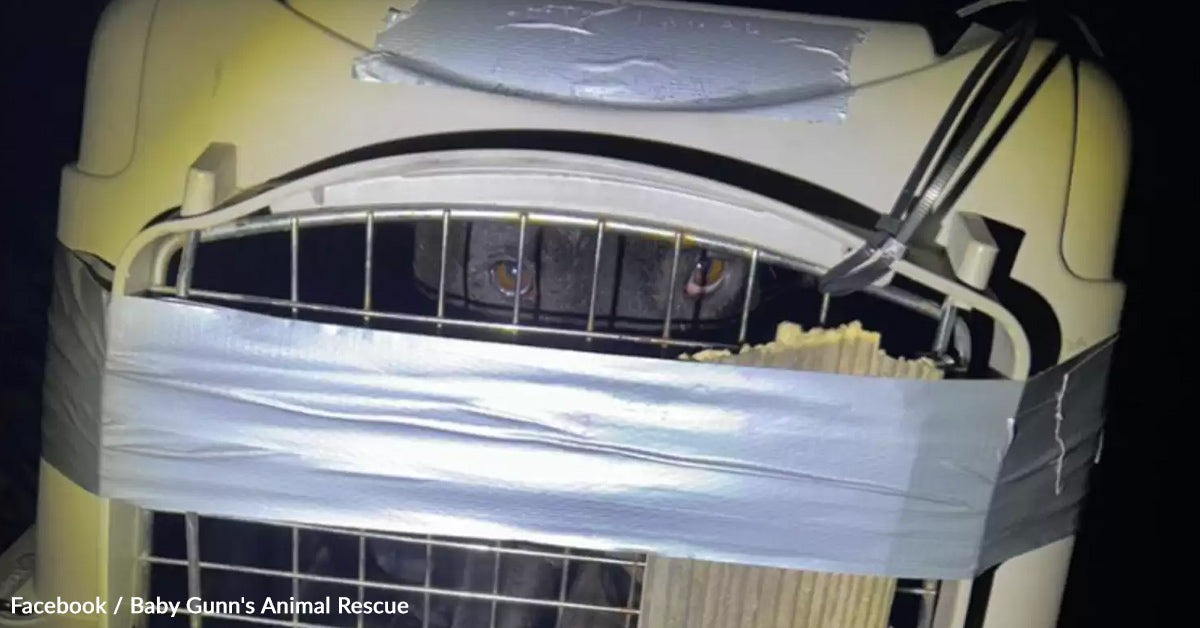
As the beam of her flashlight scanned the yard, it landed on something out of place — a yellow crate sealed tightly with duct tape and zip ties. At first glance, it looked like discarded debris. But something about it felt wrong.
As she moved closer, she noticed movement inside.
Through the slats, she saw a pair of eyes looking back at her.
In an interview later shared by The Dodo, Stowe explained that she wasn’t immediately sure what kind of animal was inside. What she could hear, however, was unmistakable: the steady thump of a tail tapping against the side of the crate.
Despite being confined and left alone, the animal inside was wagging.

A Pit Bull Named RD
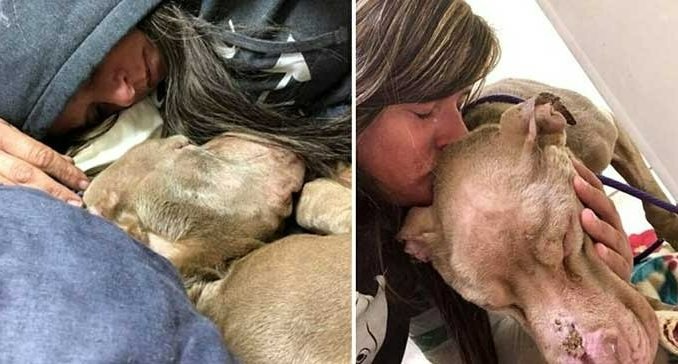
Carefully, Stowe cut through the tape and zip ties. As the crate opened, she discovered a pit bull — later named RD.
The sight was heartbreaking. Left sealed in a crate, unable to free himself, RD had still greeted his rescuer with hope.
Pit bulls are often misunderstood. Due to stereotypes and misinformation, they are among the breeds most frequently surrendered to shelters across the United States. Advocacy groups have long worked to highlight that a dog’s behavior is shaped far more by training, environment, and socialization than by breed alone.
RD’s reaction that night reinforced this truth. Instead of fear or withdrawal, he responded with affection.
The Work of Animal Rescue Organizations
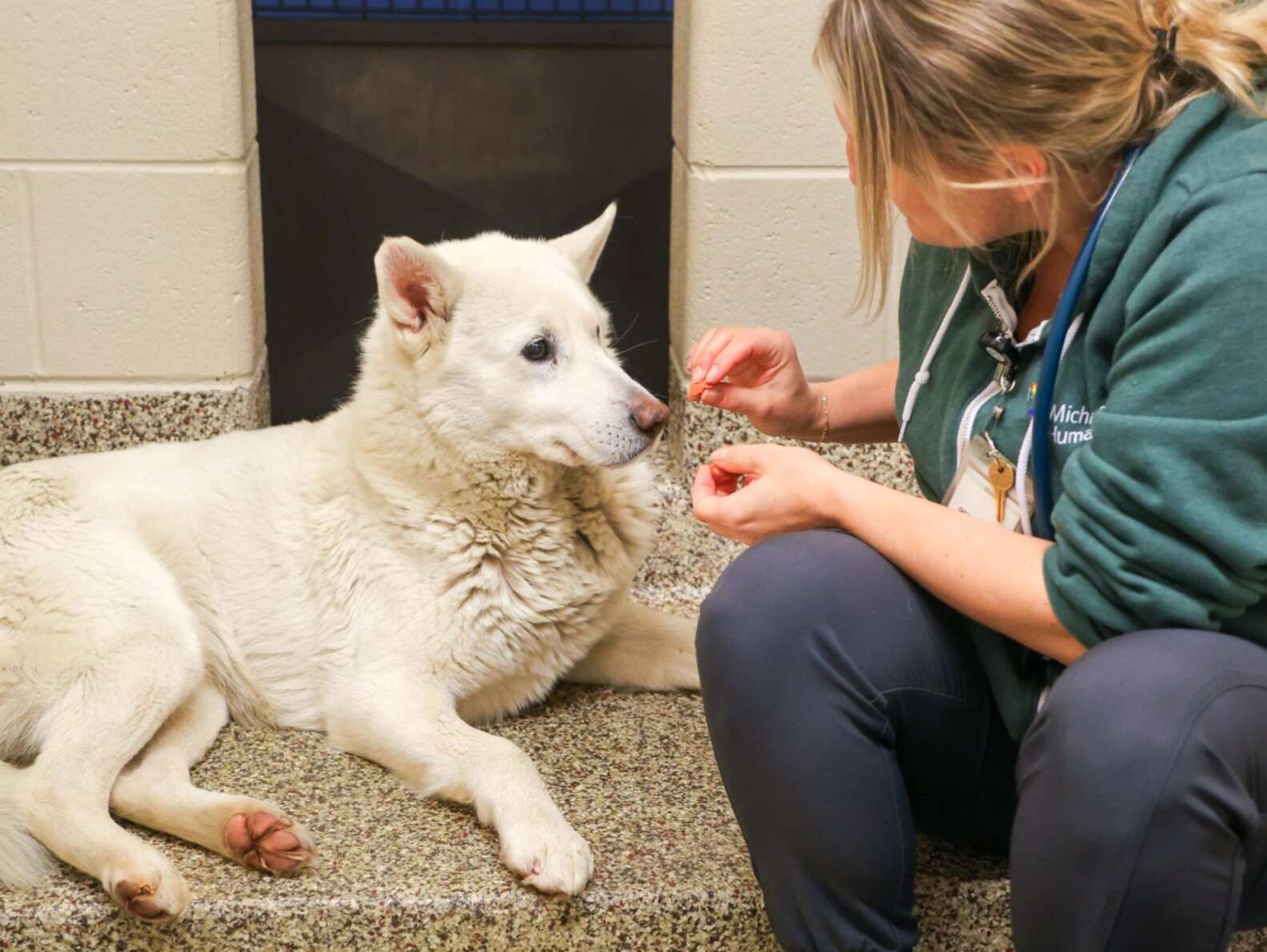
After being freed, RD was brought into the care of Baby Gunn’s Animal Rescue. Like many nonprofit rescue organizations, the group focuses on rehabilitation, medical evaluation, and safe rehoming for dogs in need.
Rescue work involves far more than providing food and shelter. Dogs who have experienced abandonment often require time to rebuild trust, adjust to structured routines, and gradually socialize with other animals.
According to Stowe, RD has been slowly introduced to other resident dogs and is adjusting at his own pace.
This gradual approach is crucial. Behavioral experts consistently emphasize that dogs who experience sudden changes benefit from predictable schedules, calm environments, and positive reinforcement training.

Understanding Animal Abandonment
Animal abandonment remains a serious issue in many communities. Economic hardship, housing instability, lack of education about responsible pet ownership, and unplanned litters all contribute to the problem.
Organizations such as the American Society for the Prevention of Cruelty to Animals estimate that millions of dogs enter shelters each year. While many are successfully adopted, others require extended care before they are ready for new homes.
Stories like RD’s highlight both sides of the issue: the vulnerability of pets when left without support, and the remarkable resilience many animals display when given another chance.
The Resilience of Dogs
One of the most striking aspects of RD’s story is not just the circumstances in which he was found, but how he responded.
Dogs are highly social animals. Even after difficult experiences, many retain a capacity for trust that can feel astonishing. Animal behaviorists explain that this resilience may stem from domestication over thousands of years. Dogs have evolved alongside humans, forming strong social bonds and adapting to cooperative living.
That bond can endure even when circumstances are challenging.
RD’s wagging tail in that crate was not simply a reflex — it was a social signal. It indicated openness to connection.
And that connection changed everything.
Rehabilitation and Adjustment
Healing does not happen overnight.
After rescue, dogs typically undergo veterinary evaluations to ensure they are physically stable. They are also observed for behavioral signs of stress or anxiety. From there, structured routines help create predictability.
For RD, this has meant gentle introductions to other dogs and time to decompress in a secure setting.
Gradual socialization is essential, particularly for dogs who may have experienced isolation. Controlled interactions, supervised play, and reward-based training all contribute to rebuilding confidence.
Over time, these steps prepare a dog for adoption.
Challenging Breed Stereotypes
Pit bulls, in particular, face unique challenges in the adoption landscape. Breed-specific legislation in certain areas, housing restrictions, and misconceptions about temperament can make placement more difficult.
However, numerous temperament studies suggest that many pit bull–type dogs score similarly to other popular family breeds in standardized behavioral assessments.
Rescue organizations continue to advocate for evaluating dogs as individuals rather than making assumptions based solely on appearance.
RD’s story contributes to that ongoing conversation. His response to rescue — hopeful, affectionate, responsive — counters many of the narratives that have followed the breed for years.
The Importance of Responsible Adoption
For families considering adoption, stories like RD’s serve as reminders of the importance of preparation and commitment.
Adopting a rescue dog often means embracing a period of adjustment. New routines, veterinary visits, training sessions, and patience all play vital roles in a successful transition.
Prospective adopters are encouraged to:
Research breed traits and energy levels
Ensure housing policies allow pets
Budget for medical care and supplies
Commit to consistent training and enrichment
When approached thoughtfully, adoption can be life-changing for both dog and family.
Community and Compassion
Behind every rescue story is a network of individuals working together — volunteers, foster families, veterinarians, donors, and advocates.
Carla Stowe’s decision to investigate her dogs’ barking set off a chain of events that gave RD a second chance. But sustaining that chance requires ongoing community support.
Rescue organizations rely heavily on public engagement. Donations, foster homes, and adoption inquiries all help create pathways for dogs like RD to find stable futures.
Compassion at the individual level becomes transformation at the collective level.
A Brighter Future
Today, RD is no longer confined to a sealed crate. He is surrounded by caregivers focused on his wellbeing. He is learning routines, meeting other dogs, and gradually stepping into a new chapter.
When he is ready, he will be placed for adoption into a carefully screened home.
Stories like this resonate because they highlight two powerful realities at once: vulnerability and hope.
Yes, animal abandonment is a serious issue that requires education and advocacy. But it is equally true that acts of kindness can interrupt even the bleakest circumstances.
Why These Stories Matter
We are drawn to rescue stories not simply because they are dramatic, but because they affirm something deeper about human responsibility.
They remind us that animals depend on us.
They challenge us to respond when something feels wrong.
They demonstrate how a single moment of attention — a flashlight beam in the yard — can change a life.
RD’s journey from confinement to care illustrates the resilience of dogs and the impact of compassionate action.
Final Reflection
In a world filled with constant headlines and fast-moving stories, it is easy to feel overwhelmed. Yet sometimes, change begins quietly — with a bark in the night and someone willing to investigate.
The bond between humans and dogs has endured for thousands of years because it is rooted in mutual trust. When that trust is broken, it can be rebuilt. When vulnerability appears, compassion can answer it.
RD’s story is not just about rescue. It is about choice — the choice to help rather than ignore, to care rather than turn away.
And in that choice lies the power to rewrite endings into new beginnings.
Sources
American Society for the Prevention of Cruelty to Animals (ASPCA) – U.S. Shelter Intake Statistics
American Veterinary Medical Association (AVMA) – Guidelines on Responsible Pet Ownership
The Dodo – Interview coverage with Carla Stowe
National Animal Care & Control Association – Best Practices for Animal Rescue and Rehabilitation


Leave a Reply