
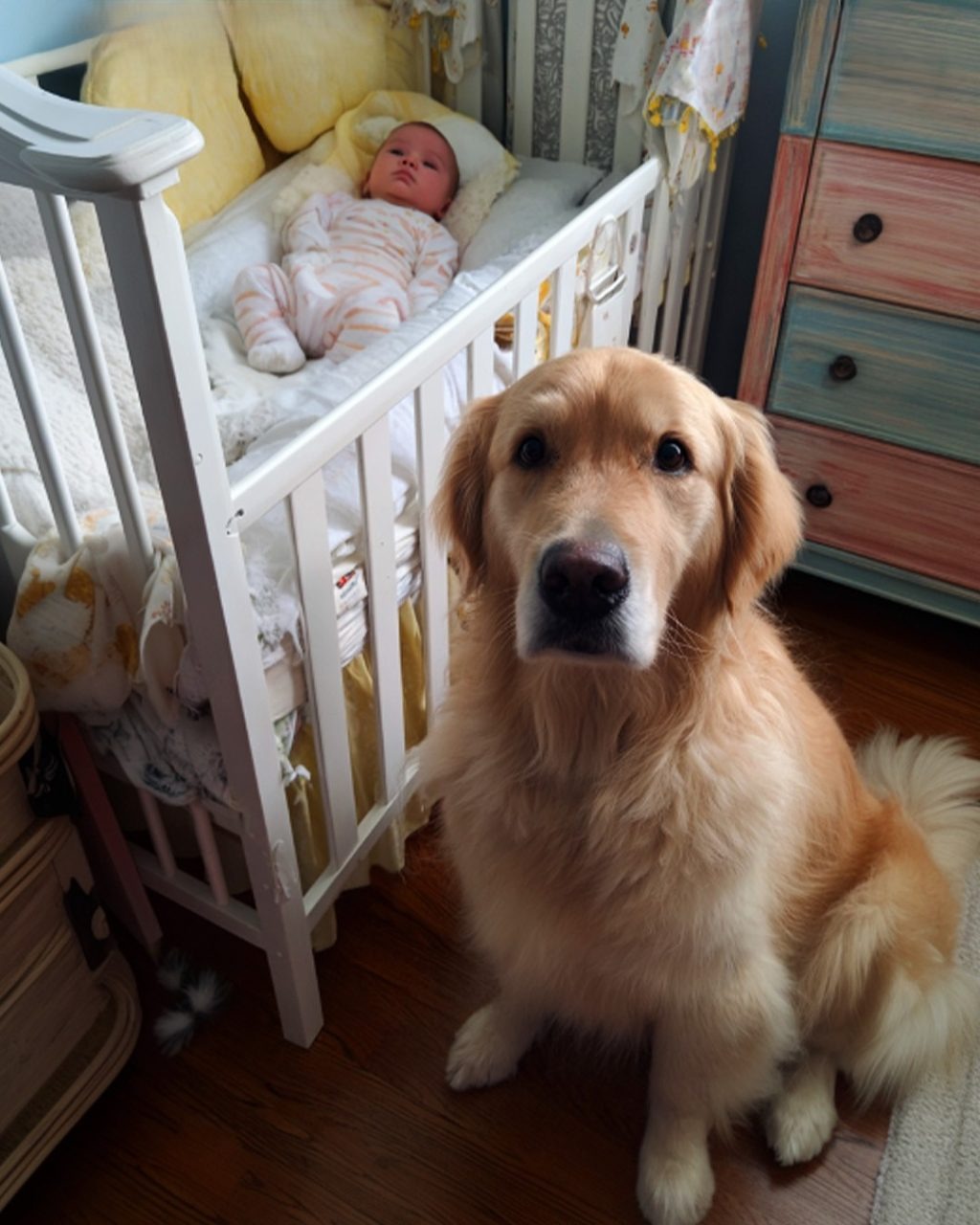
Bringing home a newborn is one of life’s most emotional milestones. The house feels different. Softer. Quieter. Every sound matters. Every movement feels amplified. And for families who already share their lives with a dog, there’s often one lingering question beneath the excitement:
How will our dog react to the baby?
Some parents worry. Others hope for adorable friendship moments. But what unfolds in many homes is something deeper and more instinctive — a quiet transformation in the family dog.
This article explores protective dog instincts, the science behind canine bonding, and how pets form meaningful connections with newborns. We’ll look at both the biological perspective and the emotional reality many families experience, while offering practical guidance for safe and healthy introductions.

Why Dogs React Strongly to Newborns
Dogs are highly social animals. For thousands of years, they have evolved alongside humans, learning to read facial expressions, interpret tone, and respond to emotional cues. Research from institutions such as the American Kennel Club (AKC) and the American Veterinary Medical Association (AVMA) highlights that dogs are exceptionally attuned to changes within their household environment.
When a newborn arrives, everything changes.
New sounds
New scents
New routines
New emotional energy
To a dog, these shifts are significant. Babies smell different from adults. They move unpredictably. They make high-pitched noises. All of these stimuli activate a dog’s attention.
Some dogs respond with curiosity. Some appear cautious. Others display what many owners describe as protective behavior.
The Science Behind Protective Instincts
Dogs descend from wolves, whose survival depended on cooperation and group awareness. In a pack structure, vulnerable members — especially young ones — receive attention and monitoring from adult animals.
While domestic dogs are far removed from wild pack life, traces of these instincts remain.
Behaviorists suggest that when a newborn enters the home, a dog may perceive the baby as a new, vulnerable member of the “pack.” This perception can trigger increased alertness, proximity-seeking behavior, and watchfulness.
It’s important to frame this scientifically rather than romantically. Dogs are not consciously deciding to become guardians in a human sense. Instead, they are responding to environmental and social cues that signal change and vulnerability.
That said, the emotional effect can feel extraordinary.

How Dogs Bond With Newborns
Bonding does not happen instantly in every case. It is usually gradual and based on repeated positive exposure.
Here are some common ways dogs begin forming connections with babies:
1. Scent Recognition
Dogs rely heavily on smell. Before even seeing the baby clearly, a dog is likely building familiarity through scent. Many experts recommend allowing the dog to smell a baby blanket before the infant enters the home to ease the transition.
2. Emotional Mirroring
Studies in canine cognition suggest that dogs mirror human emotional states. When parents display nurturing behavior toward a newborn, dogs often observe and adapt to the new emotional tone of the household.
3. Routine Association
Dogs thrive on routine. When daily walks, feeding times, and affection continue consistently alongside the baby’s presence, dogs begin associating the newborn with stability rather than disruption.
4. Gentle Exposure
Gradual, supervised interactions help reinforce calm behavior. When a dog receives praise for relaxed responses near the baby, that behavior strengthens.
Over time, many dogs naturally settle into a calm presence near cribs, bassinets, or play mats — not out of obligation, but because familiarity reduces uncertainty.
Are Some Breeds More Protective Than Others?
Certain breeds have historical roles tied to guarding or companionship. For example:
German Shepherds were bred for protection and service work.
Golden Retrievers were developed as gentle retrieving companions.
Labrador Retrievers are widely recognized for their family-friendly temperament.
However, breed tendencies are only part of the story. Individual temperament, training, early socialization, and environment play far greater roles than breed label alone.
A small mixed-breed rescue dog may display just as much attentiveness as a traditionally “protective” breed. Each dog is unique.

The Difference Between Protection and Stress
One crucial distinction is recognizing whether a dog is calmly attentive or experiencing stress.
Healthy protective-style behavior may include:
Staying nearby
Watching quietly
Following parents when they carry the baby
Relaxing beside the crib
Stress signals, however, may include:
Excessive pacing
Whining
Avoidance
Resource guarding behavior
Hyper-fixation
If a dog appears anxious or overwhelmed, consulting a certified trainer or veterinary behaviorist is recommended.
The goal is harmony, not heightened vigilance.
Safety First: Creating a Healthy Environment
While many stories celebrate dogs acting as loving companions to infants, safety must always remain the priority.
The American Academy of Pediatrics and veterinary associations consistently advise:
Never leave a dog and baby unsupervised
Teach calm behavior before the baby arrives
Avoid forcing interactions
Reward relaxed responses
Maintain the dog’s normal routine as much as possible
Dogs and newborns can coexist beautifully — but it requires mindful management from adults.
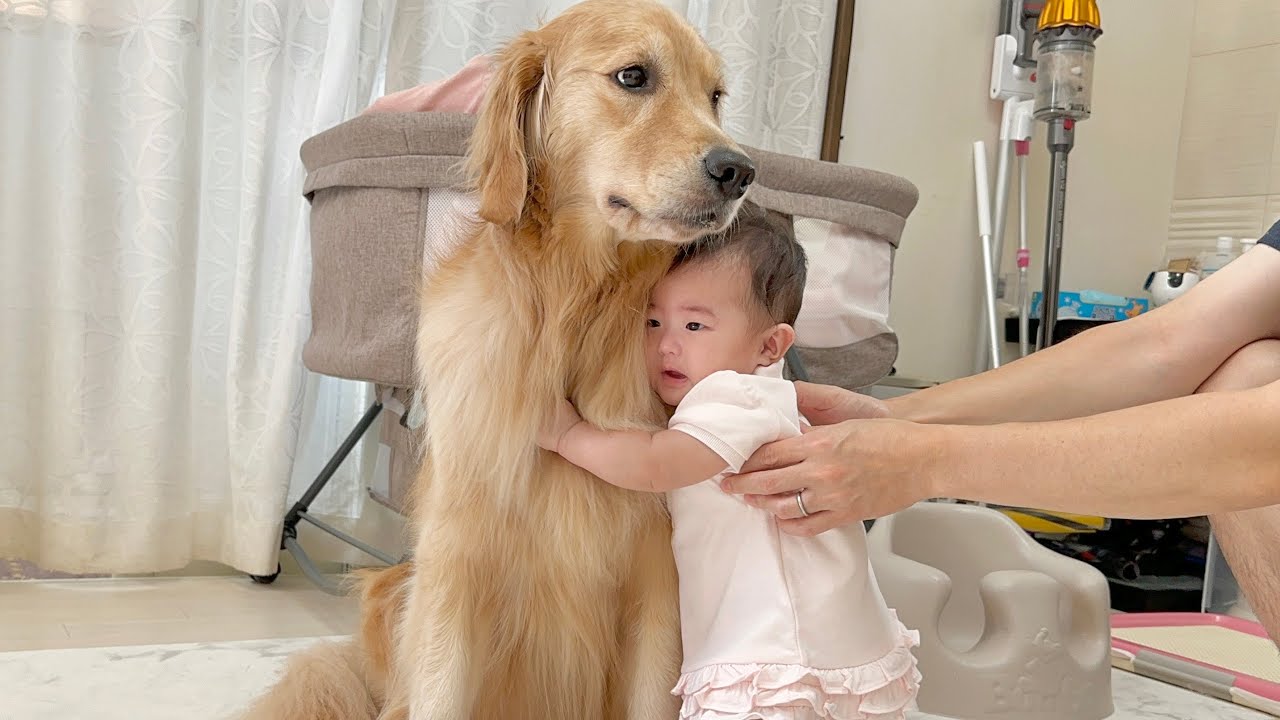
Emotional Stories vs. Scientific Reality
Online, you’ll find countless heartwarming stories about dogs sensing danger or reacting protectively around babies. While many of these anecdotes are genuine, they should be understood thoughtfully.
Dogs have heightened hearing and smell. They may notice subtle changes in breathing patterns, unusual noises, or environmental shifts before humans do. This can appear almost intuitive.
However, experts caution against attributing human-like reasoning to dogs. Their responses are rooted in instinct, training, and learned associations — not abstract moral decisions.
Understanding this balance allows families to appreciate the bond without unrealistic expectations.
Long-Term Benefits of Growing Up With a Dog
When managed safely, children raised alongside dogs may experience meaningful benefits.
Research published in pediatric and veterinary journals suggests possible positive outcomes such as:
Early exposure to pet dander potentially supporting immune development
Opportunities for empathy building
Learning responsibility and gentle behavior
Reduced feelings of loneliness later in childhood
Again, these outcomes depend on supervision and appropriate pet management. A well-adjusted dog can become a steady, comforting presence in a child’s life.
Preparing Your Dog Before Baby Arrives
If you’re expecting, preparation can make a significant difference.
Introduce baby sounds gradually through recordings
Practice walking with a stroller before the baby comes
Set up nursery furniture early so it’s not a sudden change
Reinforce basic obedience commands
Create a quiet retreat space for your dog
The smoother the transition, the more likely your dog will respond calmly and confidently.
When Bonding Takes Time
Not every dog immediately warms to a newborn. Some may seem indifferent. Others need space to adjust.
That’s normal.
Dogs process change at their own pace. What matters most is consistency, patience, and positive reinforcement. Bonding is built through routine, not pressure.
Often, months later, parents notice subtle shifts — the dog choosing to nap near the baby, responding gently to small sounds, or walking protectively beside a stroller.
These moments feel meaningful because they are built on trust.
A Shared Evolution
One of the most fascinating aspects of this topic is the evolutionary history behind it.
Dogs and humans have lived alongside each other for over 15,000 years. Throughout that time, we selected for traits like cooperation, attentiveness, and social awareness.
In many ways, dogs evolved to live with us — not just beside us.
When a newborn enters a home, the dog is witnessing one of humanity’s most vulnerable stages of life. Their responses reflect generations of adaptation to human family structures.
It is less about heroic protection and more about deep-rooted social integration.
The Emotional Reality
Ask any parent whose dog calmly lay beside a bassinet during late-night feedings, and you’ll hear something similar:
It felt comforting.
Even knowing the science, even understanding instinct, there is something profoundly moving about seeing two species coexist so closely — one tiny and new, the other experienced and steady.
It reminds us that companionship crosses language barriers.
It reminds us that connection is not always verbal.
It reminds us that loyalty often shows itself quietly.
Final Thoughts: Curiosity, Instinct, and Connection
The relationship between protective dog instincts and newborn babies sits at the intersection of biology and emotion.
Science explains the behaviors.
Instinct drives the attentiveness.
Environment shapes the outcome.
But human curiosity gives the bond meaning.
We are fascinated by the way animals respond to our most precious moments. We look for patterns. We search for reassurance. We want to believe in loyalty and connection — and often, we find it.
Perhaps what truly captivates us is not the idea of a dog becoming a guardian, but the deeper truth: that two very different beings can share space, adapt to one another, and build trust in the quiet corners of everyday life.
In that shared adjustment lies something timeless — a reminder that coexistence, when guided with care, can become one of the most beautiful parts of family life.
Sources
American Kennel Club (AKC) – Canine Behavior and Family Integration Resources
American Veterinary Medical Association (AVMA) – Pet Safety and Child Interaction Guidelines
American Academy of Pediatrics – Recommendations on Pets and Infants
Serpell, J. A. (2017). The Domestic Dog: Its Evolution, Behavior and Interactions with People
Horowitz, A. (2016). Being a Dog: Following the Dog Into a World of Smell





Leave a Reply