
A Shelter Intake That No One Could Ignore
The kennel doors had barely stopped swinging when staff noticed her.
She walked in slowly but with determination. Her tail wagged. Her eyes were soft. Despite everything, she greeted each person with trust.
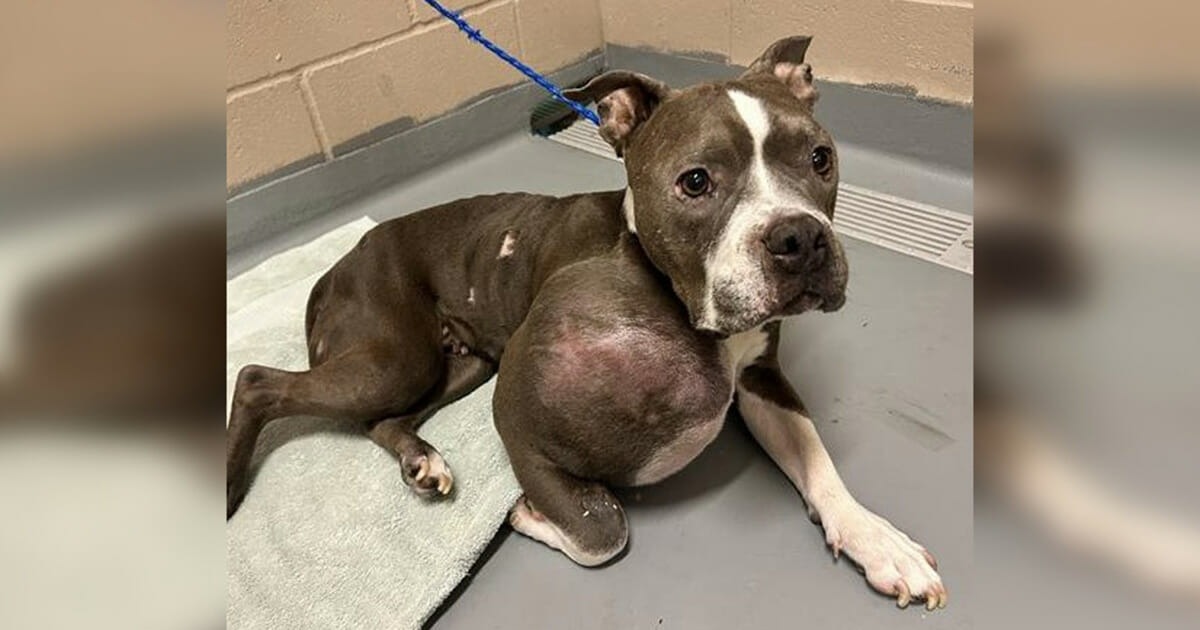
But there was no missing the large swelling on her leg.
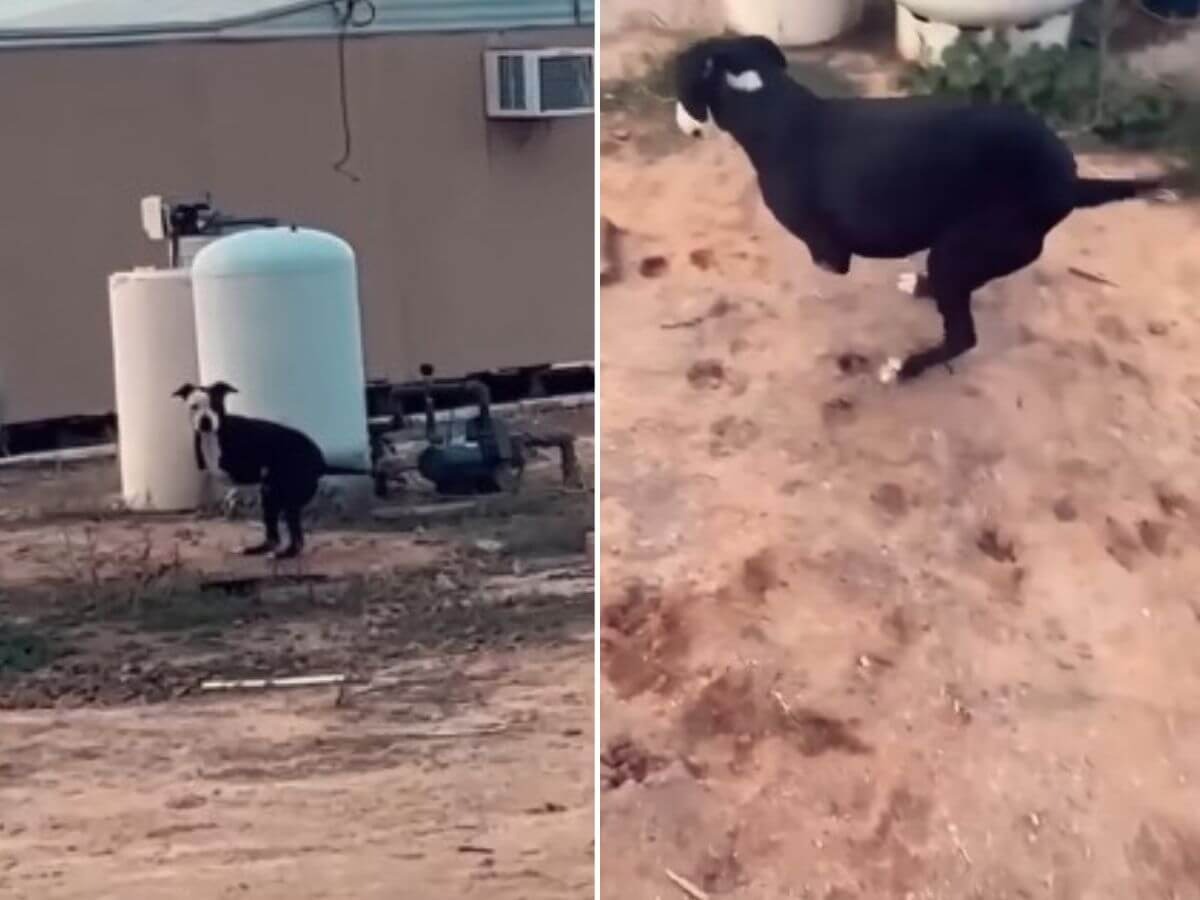
In August 2023, the Humane Society for Tacoma & Pierce County in Washington took in a stray pit bull named Libby. She was described as “full of life” with a sweet face and kind eyes.
Yet attached to her upper right leg was a tumor weighing nearly 10 pounds and measuring roughly the size of a volleyball. Staff members later shared that it was one of the largest masses they had ever seen.
Libby’s story would soon become a powerful example of compassion, veterinary science, and community support working together.

Overwhelmed but Determined to Help
Libby arrived during an especially busy stretch for the shelter. As Washington’s largest intake facility, the organization was already responding to multiple urgent cases within a 48 hour window. Dozens of animals were arriving daily.
Still, the team refused to turn away.
Shelter representatives shared publicly that while Libby deserved the most compassionate care possible, they did not yet know what her medical outcome would be. Their first step was diagnostic testing to understand the nature of the tumor.
In the meantime, Libby received pain medication to ease discomfort and constant affection from staff members who were already attached to her gentle personality.
Her case highlights the broader reality facing shelters across the country. According to the ASPCA, millions of companion animals enter shelters annually, many requiring medical treatment beyond routine care.
Libby’s condition required immediate answers.

The Medical Diagnosis
X rays revealed that the tumor originated in the bone of Libby’s upper right leg. Veterinary experts determined that the mass had grown unusually large due to reactive inflammation, which contributed to swelling and significant discomfort.
Bone tumors in dogs can vary widely in severity and prognosis. According to the American Veterinary Medical Association, treatment options often depend on the tumor type, size, and whether it has spread.
In Libby’s case, veterinarians concluded that amputation would be necessary to remove the mass and eliminate her pain.
For many pet owners, the idea of amputation can sound overwhelming. However, veterinary specialists consistently report that dogs adapt remarkably well to life on three legs, particularly when the source of chronic discomfort is removed.
The primary goal was clear: restore her comfort and give her the best possible quality of life.
Community Support Makes Surgery Possible
Major surgeries are expensive, and shelters must carefully manage limited resources.
When Libby’s story was shared publicly, donations began to arrive. Supporters contributed funds to cover the cost of her procedure, demonstrating how community engagement can directly impact an animal’s future.
The surgery was performed by the veterinary team at BluePearl Pet Hospital.
The operation was successful.
For the first time in months, Libby was free from the physical burden she had been carrying.
Shelter staff described visible relief in her posture and movement during recovery. Without the heavy tumor weighing her down, she could move more comfortably and interact more energetically.

Both Good and Difficult News
While the removal of the tumor brought relief, pathology results revealed a challenging diagnosis: aggressive bone cancer.
This meant that although the visible mass had been removed, the long term outlook remained uncertain.
Veterinary oncology has made significant progress in managing various cancers in pets. Treatments such as chemotherapy, targeted therapy, and palliative care can extend both lifespan and comfort. According to research referenced by the National Canine Cancer Foundation, early intervention and supportive care play a key role in improving outcomes.
Still, every case is unique.
For Libby, now recovering from surgery, the focus shifted from uncertainty to opportunity.
An Unexpected Adoption
Sometimes the most meaningful chapters begin quietly.
During Libby’s recovery, a veterinary technician working closely with her formed a deep connection. Despite knowing that Libby’s time might be limited, she felt drawn to the dog’s spirit.
“There’s something in her eyes that begs for love and safety,” the adopter shared publicly. “I couldn’t turn away from that.”
She made the decision to adopt.
Libby was given a new name: Wiggles.
The name fit perfectly. Even after everything she had endured, her tail rarely stopped moving.

Life as Wiggles
In her new home, Wiggles quickly settled into family life. She now shares her days with a dog sibling, cozy couches, and structured routines designed to support her recovery.
Dogs recovering from limb amputation typically adjust within weeks. Studies in veterinary rehabilitation indicate that most dogs regain balance and mobility faster than many owners expect, particularly when they are otherwise healthy.
Wiggles enjoys playtime, short walks appropriate for her strength level, and long naps in comfortable surroundings.
Though her long term prognosis remains uncertain, her daily life is filled with stability and affection.
Her adopter understands that the time they share may not be measured in years. Instead, it is measured in moments.
The Broader Lesson About Shelter Medicine
Libby’s story illustrates several important realities about modern animal shelters.
First, shelters are often medical lifelines for animals who would otherwise go untreated.
Second, community donations directly enable advanced procedures that change outcomes.
Third, special needs dogs are adoptable and capable of thriving in loving homes.
Organizations like the Humane Society of the United States emphasize that medical cases should not automatically limit adoption potential. With transparency, education, and support, adopters can provide exceptional care.
Wiggles is proof.
Why Stories Like This Matter
When people hear about a pit bull with a volleyball sized tumor, it is easy to focus on shock.
But the deeper story is about response.
A shelter chose to invest in care rather than assume the worst.
A community chose to donate rather than scroll past.
A veterinary team chose precision and compassion.
And one person chose adoption, even knowing the road ahead may be uncertain.
Each decision built the next.
A Reflection on Compassion
Wiggles began her journey carrying a physical burden that few could ignore. Today, she carries something different: the visible imprint of collective kindness.
Her story reminds us that while medical realities can be complex, love is not.
Shelters across the country continue to face overwhelming demand. Yet inside those facilities are teams determined to offer second chances, even in the most challenging cases.
Wiggles may not know how many people rallied behind her.
She only knows that she wakes up safe.
And sometimes, that is enough.
If stories like this resonate with you, consider supporting your local shelter, fostering a pet in need, or learning more about special needs adoption. Every act of care extends the chain of second chances.
Because behind every kennel door, there may be another Wagging tail waiting for hope.



Leave a Reply