
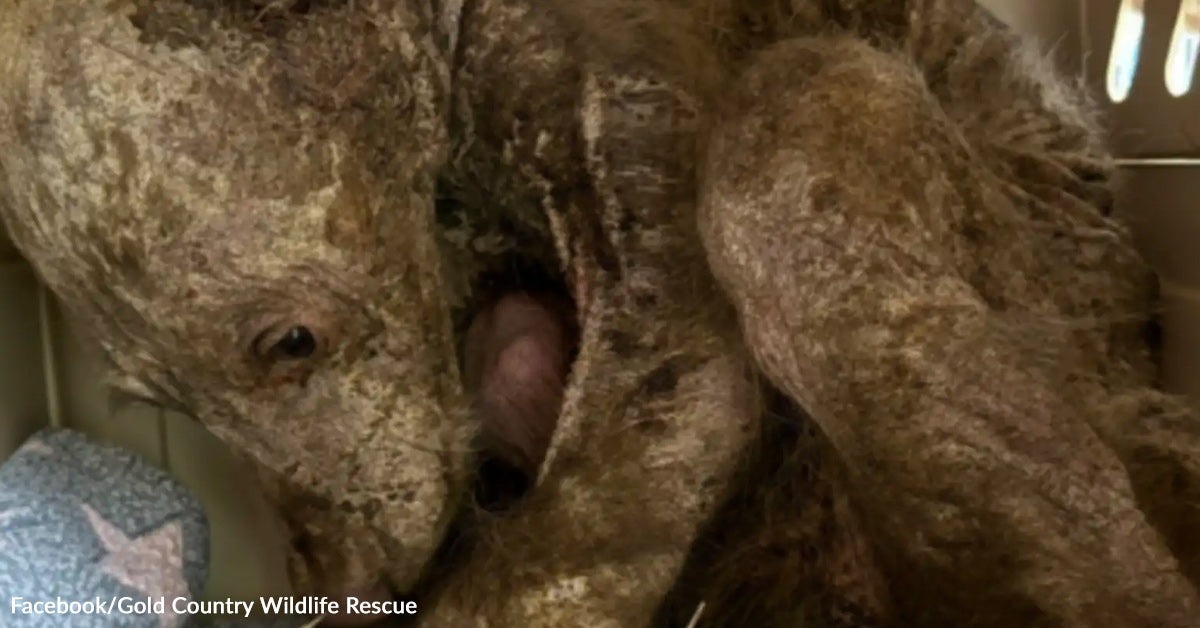
In December 2025, a small black bear cub was discovered alone in El Dorado County, California. At first glance, he was barely recognizable as a bear. His fur was mostly gone. His skin appeared wrinkled and exposed. He was dehydrated, anemic, and suffering from a serious skin infection. Curled tightly inside a crate, he seemed overwhelmed and uncertain of his surroundings.
Just weeks later, that same cub would become one of the most extraordinary recovery stories local wildlife rehabilitators had ever seen.
A Fragile Arrival in Northern California
The cub was brought to Gold Country Wildlife Rescue in North Auburn, a nonprofit organization experienced in rehabilitating injured and orphaned wild animals. Staff members quickly assessed his condition and developed a treatment plan tailored to his needs.
According to updates shared by the organization, the cub was severely dehydrated and anemic, with a skin infection that had caused significant hair loss. His frail appearance made it difficult to believe he was a healthy young black bear just weeks earlier.
Despite the seriousness of his condition, the team approached his care with cautious optimism. Wildlife rehabilitation often requires balancing medical intervention with minimal human interaction, ensuring animals retain the instincts they need to survive in the wild.

Early Days of Treatment and Care
During his first days at the facility, the cub remained timid and withdrawn. Caregivers observed him staying curled up in his enclosure, avoiding eye contact and remaining still for long periods.
Treatment focused on stabilizing his hydration levels, addressing anemia, and carefully managing the skin infection. Nutritional support was critical. Young bears require proper caloric intake to fuel recovery and growth, especially during colder months.
The team also worked closely with guidance from the California Department of Fish and Wildlife, which oversees wildlife rehabilitation and eventual release decisions within the state.
Importantly, staff limited direct interaction. While medical care was necessary, maintaining the cub’s natural wariness of humans would be essential if he were to return to the wild.
The First Signs of Change
Recovery did not happen overnight. For weeks, progress was gradual. Then came the first visible milestone: soft fur beginning to regrow along his face.
Though subtle, this development marked a turning point. Healthy fur growth signaled that treatment was working and that the cub’s body was responding positively to care.
As his physical health improved, so did his behavior. He began exploring his enclosure more confidently. Caregivers introduced enrichment tools, including a shallow kiddie pool and a hammock made from firehose material. These additions encouraged climbing, balancing, and playful activity — behaviors natural to young bears.
Enrichment is not simply entertainment. Wildlife experts emphasize that structured play and exploration help strengthen muscles, develop coordination, and maintain cognitive engagement.

A Transformation Few Could Have Predicted
By February 2026, the transformation was striking. The once-hairless cub now had a healthy coat of fur. His posture appeared stronger and more upright. He moved with curiosity instead of hesitation.
Staff members described his recovery as one of the most impressive they had witnessed. The bear who had once curled inward in fear now displayed alertness and independence.
Such recoveries highlight the resilience of wildlife when provided with appropriate medical care and habitat conditions. They also demonstrate the value of experienced rehabilitation centers in responding to complex cases.
The Science Behind Wildlife Rehabilitation
Black bear cubs rely heavily on their mothers during their first year of life. When orphaned, they face significant challenges, including malnutrition, vulnerability to disease, and environmental stress.
Organizations such as the National Wildlife Rehabilitators Association outline best practices for treating orphaned mammals. These guidelines stress:
Proper medical evaluation
Species-appropriate nutrition
Minimal human imprinting
Environmental enrichment
Gradual preparation for release
Each step must be carefully managed. Too much human contact can reduce an animal’s ability to survive independently. Too little intervention can jeopardize recovery.
In this cub’s case, caregivers worked diligently to maintain that balance.
What Happens Next?
Although the cub’s recovery is encouraging, his journey is not complete. Wildlife authorities will ultimately determine whether he is suitable for release into the forests of California or if he would benefit from placement in a protected sanctuary.
Release decisions depend on several factors, including:
Physical health
Behavioral independence
Foraging skills
Natural avoidance of humans
Encouragingly, caregivers report that the cub shows little interest in people, a positive sign for potential reintroduction.
If released, he would return to the mountainous woodlands of Northern California, where black bears play an important ecological role as seed dispersers and ecosystem engineers.
Why Stories Like This Matter
Wildlife rehabilitation stories resonate because they reveal both vulnerability and resilience. They remind us that even animals facing serious health challenges can recover when given the right support.
They also highlight the importance of responsible human stewardship. Habitat preservation, responsible waste management, and public awareness all reduce the likelihood of young animals becoming orphaned.
The transformation of this bear cub is not simply about fur regrowth. It reflects expert medical care, patience, and science-based rehabilitation practices working together.
A Reflection on Resilience
When the cub first arrived, he appeared fragile and uncertain. Today, he stands as a testament to what careful intervention and natural resilience can accomplish.
Human curiosity draws us to these stories. We wonder how such dramatic changes are possible. Science provides the explanation. Compassion provides the motivation.
Whether this young bear ultimately returns to the forests of California or lives in a protected sanctuary, his recovery already represents something meaningful. It is proof that with knowledge, dedication, and respect for wild instincts, even the most vulnerable animals can find a path forward.
And perhaps that is why stories like his continue to inspire — they remind us that healing is possible, and that responsible care can help nature restore itself.

Leave a Reply