

Nia’s life nearly ended before it truly began.
She was one of six newborn puppies who lost both parents in a sudden accident. One day there was warmth, milk, and protection. The next, there was silence.
No guidance.
No steady source of food.
No body heat to keep fragile systems alive.
What followed wasn’t dramatic or loud. It was quiet. Slow. Relentless.
Her story, later documented by rescuer Amy Sukmana and shared through the Dogs Are Family channel, reveals what happens when very young puppies lose the care their bodies are biologically designed to depend on — and how survival can slip away in a matter of days without intervention.

A Litter Left Without What They Needed
When Nia and her siblings were found, their bodies had already begun to show the cost of neglect — not intentional cruelty, but absence.
Very young puppies cannot survive on scraps. They require:
-
Constant warmth
-
Frequent feeding
-
Immune protection from their mother’s milk
-
Round-the-clock supervision
Without their parents, hunger became constant. The puppies grew smaller each day, their energy draining steadily.
A few neighbors noticed and tried to help. A bowl of water. Small bits of food. Concern.
But kindness without structure could not replace maternal care.
According to guidance from Best Friends Animal Society, newborn puppies must be kept in an environment between 85 and 90 degrees Fahrenheit during their first days of life. They cannot regulate their own body temperature.
Without warmth, even fed puppies can decline rapidly.
For Nia, every hour without proper care pushed her closer to organ failure.
Eventually, one neighbor made a call that changed everything.
That call reached rescuer Amy Sukmana.
When Help Finally Arrived
The situation was urgent.
Amy and her team began contacting shelters immediately. Space was limited, but arrangements were made. Each puppy would be placed safely. None would be abandoned again.
Veterinary exams followed intake.
Bloodwork revealed what their bodies had already shown.
“Nia was diagnosed with severe malnutrition,” one rescuer later shared.
Her small body had been trying to grow on almost nothing.
Veterinarians explained that recovery was possible — but not guaranteed. Careful feeding schedules, close monitoring, and time would determine the outcome.
That distinction mattered.
According to VCA Animal Hospitals, orphaned puppies should be fed every two to four hours during their first week of life. Missed meals stack up quickly. Energy reserves deplete. Organs begin to struggle.
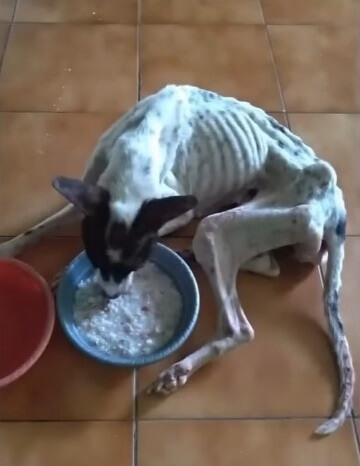
By the time Nia was rescued, the damage had already begun.
When Standing Became a Daily Battle
Food alone could not restore her strength overnight.
Nia had lost significant muscle mass. When she tried to stand, her legs trembled under her own weight. Movements that healthy puppies perform instinctively — walking, balancing, even lifting their heads — became exhausting challenges.
Rehabilitation began slowly.
There were no dramatic breakthroughs in the beginning. Just small signs:
-
A few extra seconds upright
-
A slightly steadier step
-
A stronger response to touch
“They were signs that she was still fighting,” a rescuer recalled.
Progress required discipline. Measured feedings. Controlled exercise. Gentle physical therapy.
And patience.
Young puppies also rely on colostrum — the antibody-rich milk produced by mothers immediately after birth. The Merck Veterinary Manual explains that puppies must ingest adequate colostrum early to acquire passive immunity.
Without it, infection risk increases significantly.
Nia was recovering without that protection.
Every day she improved was a victory against the odds.
Strength, One Measured Step at a Time
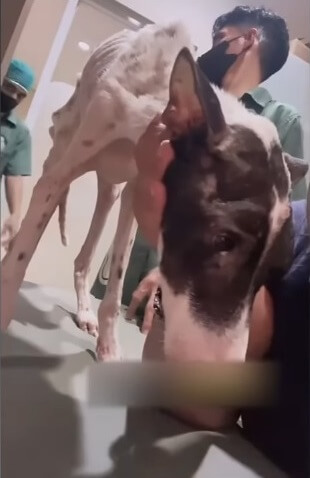
Slowly, her body responded.
Weight began to return.
Muscle tone improved.
Energy followed.
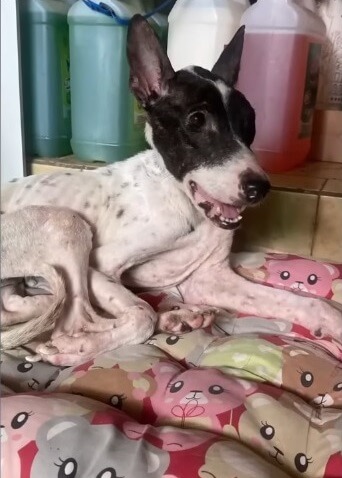
The fragile puppy who once needed support to sit upright began lifting her head with curiosity. Her eyes tracked movement in the room. Her ears perked at unfamiliar sounds.
Standing became easier. Walking became possible.
Each milestone was earned.
Recovery from severe malnutrition is rarely dramatic. It is cumulative. Built meal by meal. Step by step.
Her caregivers stayed consistent. No skipped feedings. No rushed exercises.
They understood something critical: early intervention saves lives — but sustained care transforms them.
When Fear Finally Let Go
Physical healing was only part of Nia’s recovery.
There was something else in her eyes when she first arrived — a watchfulness. A hesitation. A quiet fear that life might disappear again without warning.
Then, about a month into recovery, something shifted.
She stopped flinching at sudden movement.
She approached hands instead of shrinking away.
Her tail began to wag freely.
Trust replaced survival mode.
She began acting like what she had always been meant to be — a puppy.
Curious. Playful. Restless. Joyful.
Her spirit surfaced fully for the first time.
For the rescuers, that transformation was as meaningful as any medical milestone.

A Puppy Finally Allowed to Live
Nia began making friends. She learned to share space. To nap beside others. To chase toys and tumble clumsily across the floor.
She also made messes.
Water bowls tipped over.
Muddy paw prints appeared.
Blankets were dragged from their places.
No one complained.
Every spilled bowl was proof of safety.
Every playful mess was evidence of comfort.
These weren’t inconveniences. They were signs of life.
The puppy who once struggled to stand was now strong enough to create chaos — the good kind.
What Nia’s Story Teaches Us
Her journey is not just emotional. It is instructive.
Very young puppies are biologically fragile. They depend entirely on:
-
Warmth
-
Scheduled feeding
-
Immune protection
-
Physical contact
Without those elements, decline is rapid and often silent.
But Nia’s recovery proves something equally important:
Timely intervention works.
Structured care works.
Patience works.
She is no longer defined by the days her survival was uncertain. She is defined by the life she now lives — safe, curious, and surrounded by care.
Not an Ending — But Proof
Nia’s story doesn’t conclude with loss.
It concludes with evidence.
Evidence that awareness matters.
Evidence that small actions — like making a phone call — can interrupt tragedy.
Evidence that fragile beginnings do not have to dictate permanent outcomes.
She was once a puppy fighting to survive.
Now she is simply a puppy living.
And sometimes, that is the most powerful transformation of all.







Leave a Reply