
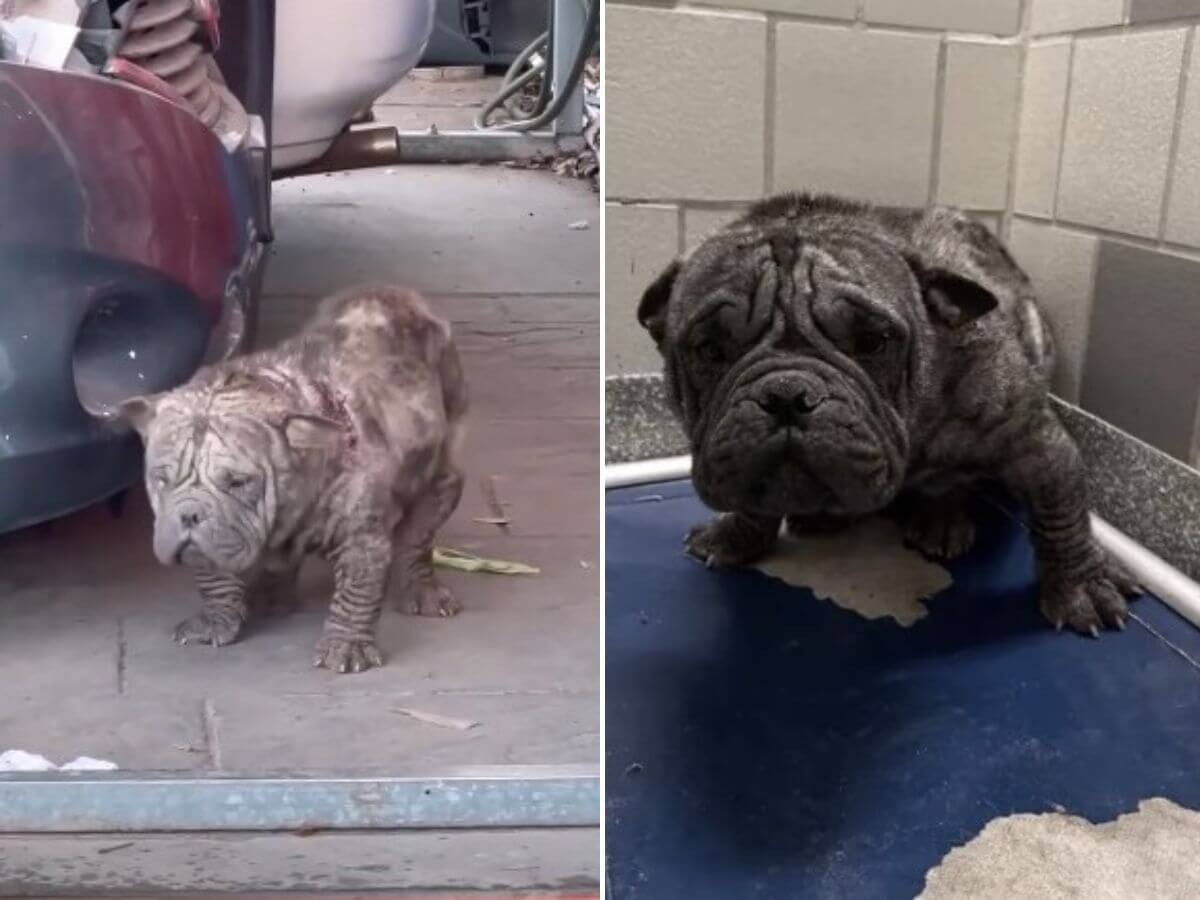
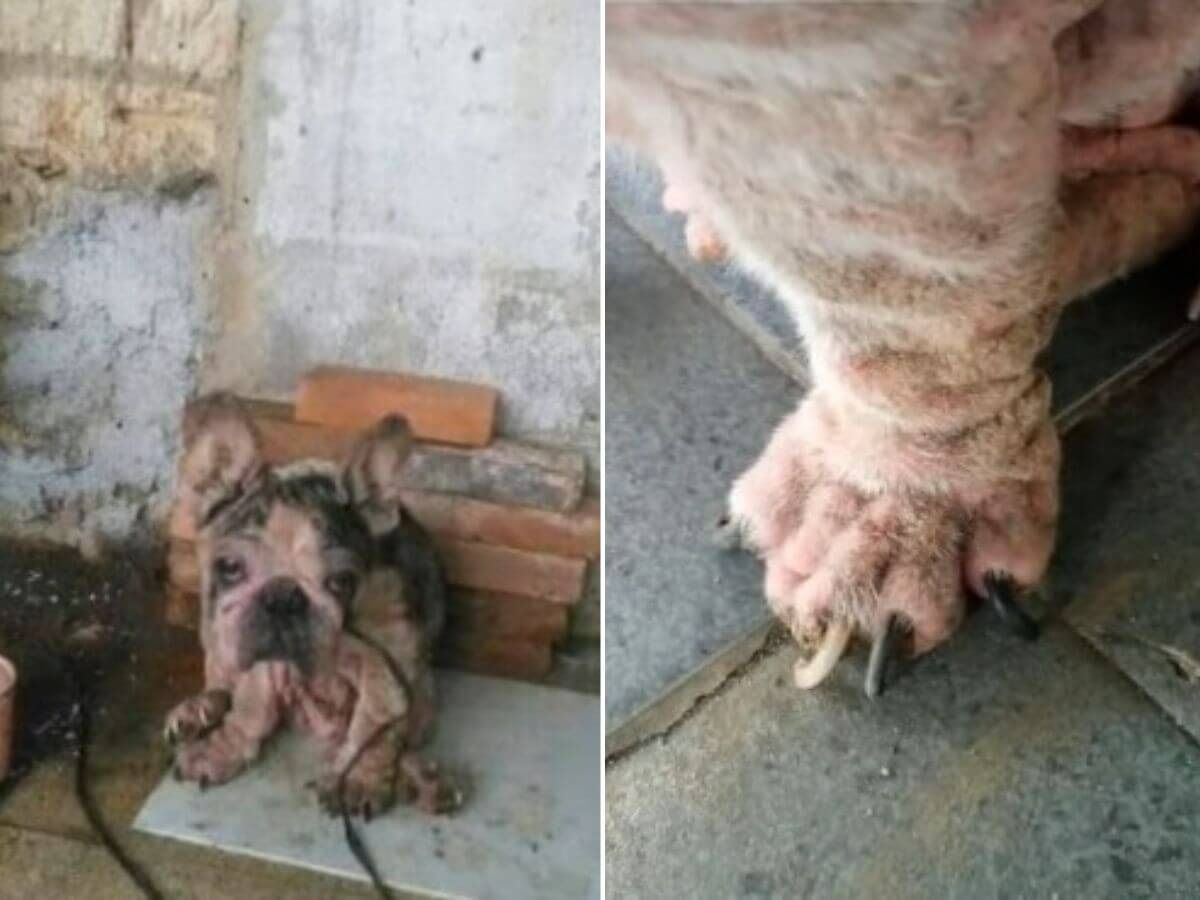
When Zuul arrived at the veterinary clinic, he did not move like a young dog.
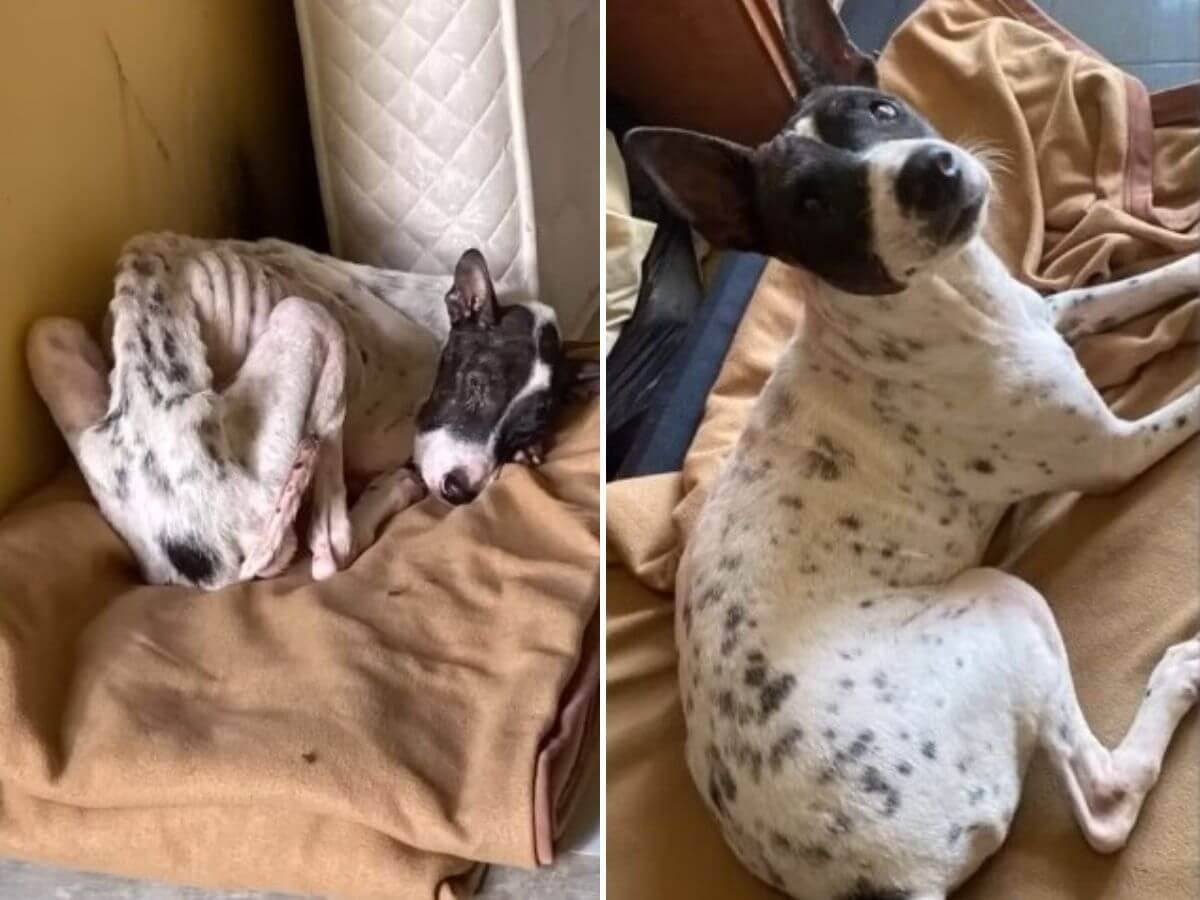
He was only four years old. Yet each step looked deliberate, as though his body required negotiation before cooperating. His legs curved under his weight. His breathing carried a strained rhythm. His skin appeared irritated and sensitive, making even stillness seem uncomfortable.
The veterinary team braced for fear. Or defensive behavior. Or visible distress.
Instead, they met a quiet, watchful gentleness.
Zuul’s story is not loud or sensational. It is steady. Clinical. Heavy in a way that lingers. He had been bred in a backyard operation where financial return mattered more than long term welfare. He was purchased without preparation and later relinquished when the medical responsibility became overwhelming.
He never chose any of it.
But what happened next reshaped the assumptions around damage, resilience, and how much a single dog can endure before giving up.

When Profit Comes Before Welfare
Dogs like Zuul often carry the invisible cost of irresponsible breeding.
The American Society for the Prevention of Cruelty to Animals explains that when profit becomes the primary goal, corners are often cut. Health screenings may be skipped. Genetic testing may be ignored. Early socialization may be limited.
When breeding prioritizes appearance over health, inherited medical conditions can follow. Structural deformities. Airway restrictions. Skin disorders. Cardiac complications.
Zuul faced several at once.
At just four years old, he had a grade five heart murmur. His legs struggled to support his frame. His skin showed signs of mange. His eyelids required surgical correction. His nostrils were narrowed in a way that made breathing more difficult than it should be.
He had been shaped to fit a specific look.
He was left to manage the consequences.

Gentle in the Midst of Discomfort
When Zuul entered the clinic, the team prepared for tension. Chronic discomfort can make animals reactive. Long term irritation can create defensive responses.
Instead, he leaned toward them.
Rescuers described him as a perfect gentleman. He did not snap. He did not resist. He allowed examinations and tolerated unfamiliar hands with quiet acceptance.
For a dog who had experienced instability, that gentleness stood out.
His nose ran constantly. His eyes were inflamed. His skin was itchy and fragile. Yet he still sought connection.
The team at Caitie’s Foster Fam saw more than medical complications. They saw potential layered beneath neglect.
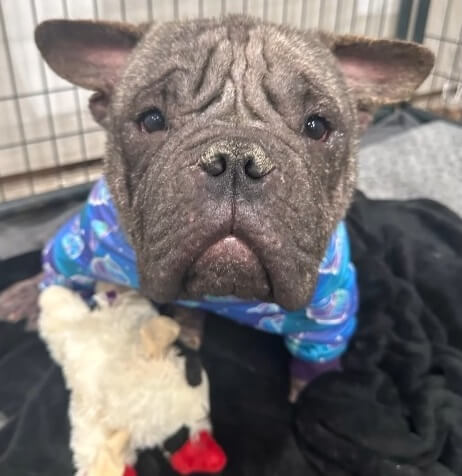
Treatment began immediately. Medicated baths were introduced. Soft pajamas protected sensitive skin. Blankets were arranged to create warmth and reduce pressure on his joints.
Progress arrived slowly. But it arrived.
Understanding the Medical Reality
A grade five heart murmur signals significant turbulence in blood flow within the heart. According to MedlinePlus, a heart murmur is an unusual sound heard during a heartbeat caused by irregular blood movement. In higher grades, close monitoring and careful management are essential.
Zuul’s skin condition required equally focused care. Mange, a condition caused by microscopic mites, can lead to irritation, hair loss, and secondary infections. The American Kennel Club explains that treatment often involves medicated therapy and patience, as improvement can initially appear slow.
As treatment progressed, Zuul entered a phase familiar to many rescue caregivers. Hair shed in uneven patches. Skin flaked. For a brief period, he looked more fragile rather than less.
But beneath that shedding layer, healing was underway.
Recovery is rarely linear. Sometimes improvement hides beneath temporary setbacks.
The Fight to Stabilize
By the third week, subtle changes appeared.
Zuul’s posture shifted. He attempted small, uneven hops toward other dogs. His eyes followed movement with curiosity rather than fatigue. He leaned into affection rather than bracing against touch.
Necessary procedures were scheduled. He was neutered. He underwent entropion repair to protect his eyes from constant irritation. He received stenotic nares correction to widen his nasal passages and improve airflow.
These interventions were not cosmetic. They were functional. They allowed him to breathe with less strain, see more comfortably, and move without constant pressure.
Each week built upon the previous one.
The dog who once required assistance to move short distances began choosing to walk on his own.
When Healing Changes More Than the Body
Physical recovery often opens the door to emotional recovery.
Zuul began stretching comfortably in the sun, as though he trusted the warmth would return tomorrow. He discovered toys and approached them with cautious curiosity. He learned that blankets were not only protective but comforting.
The rescuers reflected that his healing was no longer just medical. It was emotional.
That distinction matters.
When a dog who once hesitated at every step begins moving toward play, you are witnessing more than muscle strength returning. You are witnessing trust rebuilding.
His fur grew thicker. His breathing steadied. His stance became more balanced. His eyes appeared brighter and more engaged.
The fifty pound dog who once staggered into the clinic now moved with intention.
The Broader Lesson
Zuul’s story is personal. But it reflects a larger reality.
Irresponsible breeding practices can create preventable health challenges that follow dogs throughout their lives. Without proper health screening, genetic counseling, and ethical standards, animals may inherit avoidable conditions that require extensive care.
For families considering adding a dog to their home, preparation matters. Research matters. Ethical sourcing matters.
Prospective owners can ask for health certifications. They can consult veterinarians. They can consider adoption through reputable rescue organizations. Informed decisions protect both animals and families.
Compassion is powerful. Informed compassion is protective.
From Fragile to Free
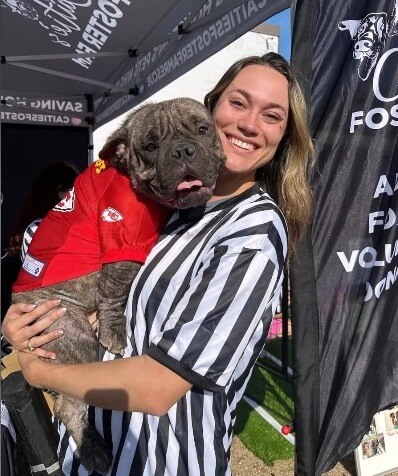
Today, Zuul moves differently.
He stretches without hesitation. He engages with toys. He approaches people with openness rather than caution.
He is no longer defined by the medical burdens he carried at arrival.
He is defined by consistent care.
The transformation did not happen overnight. It required medication, surgical intervention, routine, and patience. It required people willing to invest time without guaranteed outcomes.
It required someone to intervene when walking away would have been easier.
Zuul once entered a clinic moving like an elderly dog at four years old.
Now he runs toward the future with steadier steps.
Stories like his do more than inspire. They encourage responsible decisions, thoughtful breeding standards, and support for ethical rescue work.
Some dogs begin life in hardship.
With attentive care and informed advocacy, they can still grow into comfort and joy.

Sources
American Society for the Prevention of Cruelty to Animals. Information on responsible breeding and animal welfare standards.
MedlinePlus. Overview of heart murmurs and cardiac health in mammals.
American Kennel Club. Educational resources on mange and common canine health conditions.
Caitie’s Foster Fam. Rescue case updates and rehabilitation practices.



Leave a Reply