
Early on a freezing Sunday morning, two fishermen guided their small motorboat across the icy waters of the Detroit River. The air was sharp, the wind persistent, and sheets of ice drifted slowly along the surface. As they passed near a concrete culvert, one of the men noticed something unusual moving against the pale winter backdrop.
At first glance, it looked like a white wolf navigating the frozen shoreline.
Curious and concerned, the fishermen steered closer. What they discovered was not a wild wolf but a stranded dog standing alone on a slab of ice, surrounded by frigid water and towering concrete walls. The animal, later named Gordie, had been out there for more than 24 hours.
This dramatic rescue would soon highlight not only the compassion of everyday citizens but also the science of cold-weather survival, the myths surrounding wolf-like dogs, and the remarkable resilience of canines.

A Frigid Discovery on the Detroit River
The Detroit River, which connects Lake St. Clair and Lake Erie, is known for its strong currents and icy winter conditions. On that morning, the fishermen quickly realized the dog was in a dangerous position. High winds and concrete support pillars made it impossible for them to bring their boat close enough to reach him safely.
Recognizing they needed help, one of the men contacted his wife, who then reached out to The KARENS, a volunteer-based outreach group that assists dogs in emergency situations.
Within hours, volunteers arrived with ladders and equipment. However, accessing the culvert proved difficult due to property barriers and the steep drop toward the ice. The dog remained perched on a chunk of frozen water, exposed to temperatures that hovered around 6 degrees Fahrenheit.
The situation required additional support.
Coordinated Rescue Efforts
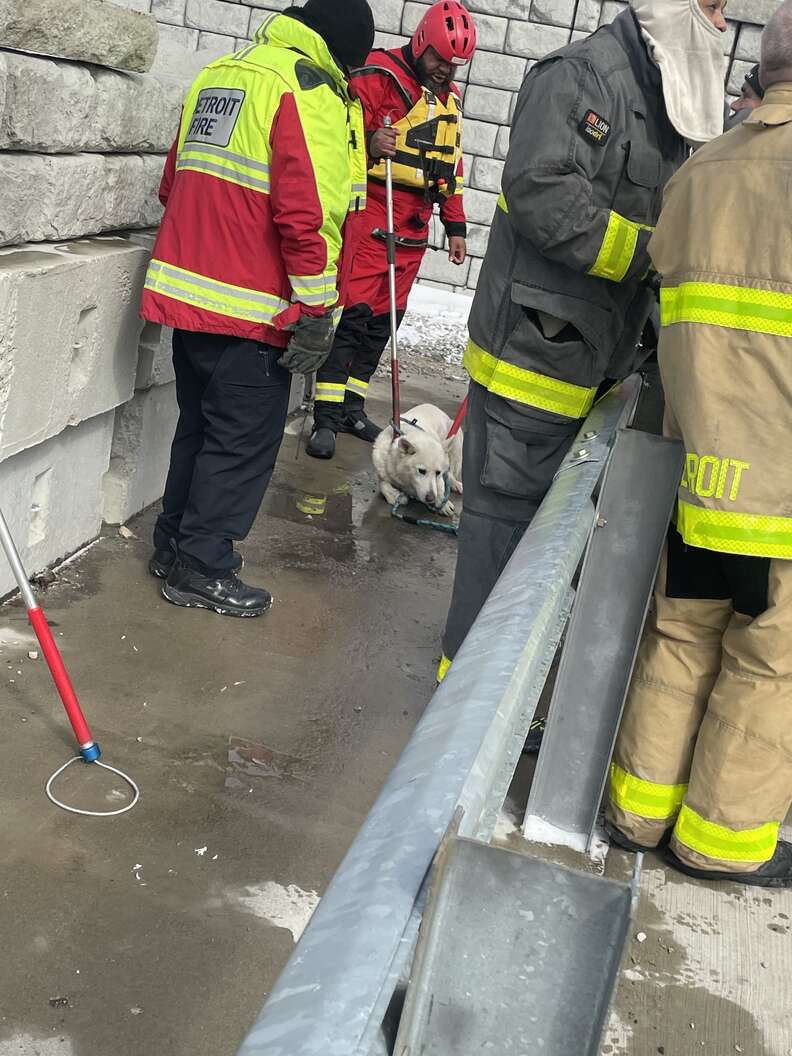
Unable to reach the dog safely on their own, The KARENS contacted Michigan Humane and local emergency responders. The following morning, a coordinated rescue operation began.
Wearing protective wetsuits suitable for icy conditions, rescue team members descended a ladder into the culvert. The water was shallow but bitterly cold. Carefully approaching the frightened dog, they used a humane catch pole to secure him and guide him toward safety.
Gordie was described as fearful and exhausted, yet responsive. After more than a full day exposed to the elements, he was hungry and experiencing hypothermia, a condition that occurs when body temperature drops below normal levels.
He was immediately transported to Michigan Humane for medical evaluation and warming treatment.

Hypothermia in Dogs: What Science Explains
Hypothermia can affect both humans and animals when exposed to prolonged cold. According to veterinary resources from organizations such as the American Veterinary Medical Association, symptoms in dogs may include shivering, lethargy, weakness, and slowed heart rate.
Certain breeds, particularly those with thick double coats like Siberian huskies, may tolerate cold temperatures better than short-haired breeds. However, even cold-adapted dogs can experience hypothermia if exposed long enough without shelter or dry ground.
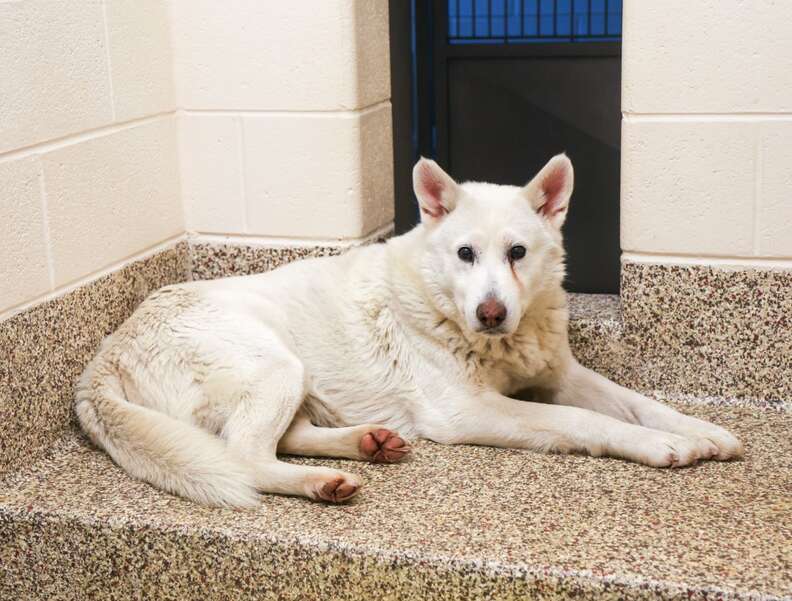
Gordie’s white coat and pointed ears suggested he may have husky ancestry. Huskies were historically bred for endurance in cold climates, but that does not make them immune to extreme exposure. Prolonged time on ice can rapidly lower core temperature, especially when combined with wind and water contact.
Veterinary teams provided warming care and nourishment. Remarkably, despite his ordeal, Gordie was found to be free of major injuries.
Why He Looked Like a “Wolf”
When the fishermen first spotted Gordie, they believed they were seeing a white wolf. This reaction is understandable. Northern breeds such as huskies share visual similarities with wolves, including upright ears, thick fur, and a lean build.
The wolf-dog resemblance has deep cultural roots. Wolves symbolize independence and wilderness in many traditions. From Native American folklore to European legends, wolves are often portrayed as mysterious guardians of nature.
Modern genetic research, including studies published by institutions such as Smithsonian Institution, confirms that domestic dogs and wolves share a common ancestry. However, thousands of years of domestication have shaped dogs into companion animals with behavioral traits suited to living alongside humans.
This evolutionary distinction helps explain why Gordie, despite his wolf-like appearance, relied on human intervention for survival.

The Psychology of Rescue: Why People Step In
The fishermen’s quick decision to seek help reflects a broader human tendency toward empathy. Research in social psychology suggests that witnessing vulnerability often activates prosocial behavior, especially when a clear action path exists.
Organizations such as Michigan Humane play a crucial role in transforming concern into coordinated response. Humane societies across the United States handle thousands of calls each year involving stray or distressed animals.
In this case, collaboration between private citizens, nonprofit volunteers, and professional responders ensured a successful outcome. Each group contributed specialized skills, from navigation and outreach to veterinary care.
How Dogs End Up Stranded in Winter Conditions
While the exact details of Gordie’s journey remain unclear, rescue workers speculated that he may have entered the culvert when the surface was more solidly frozen and later became isolated as conditions shifted.
Winter landscapes can change rapidly. Ice that appears stable one day may weaken the next due to temperature fluctuations or water movement beneath the surface. Dogs, particularly those accustomed to roaming, may misjudge stability.
Animal welfare experts emphasize the importance of microchipping and identification tags. These tools significantly increase the likelihood of reuniting lost pets with owners.
Recovery and Rehabilitation
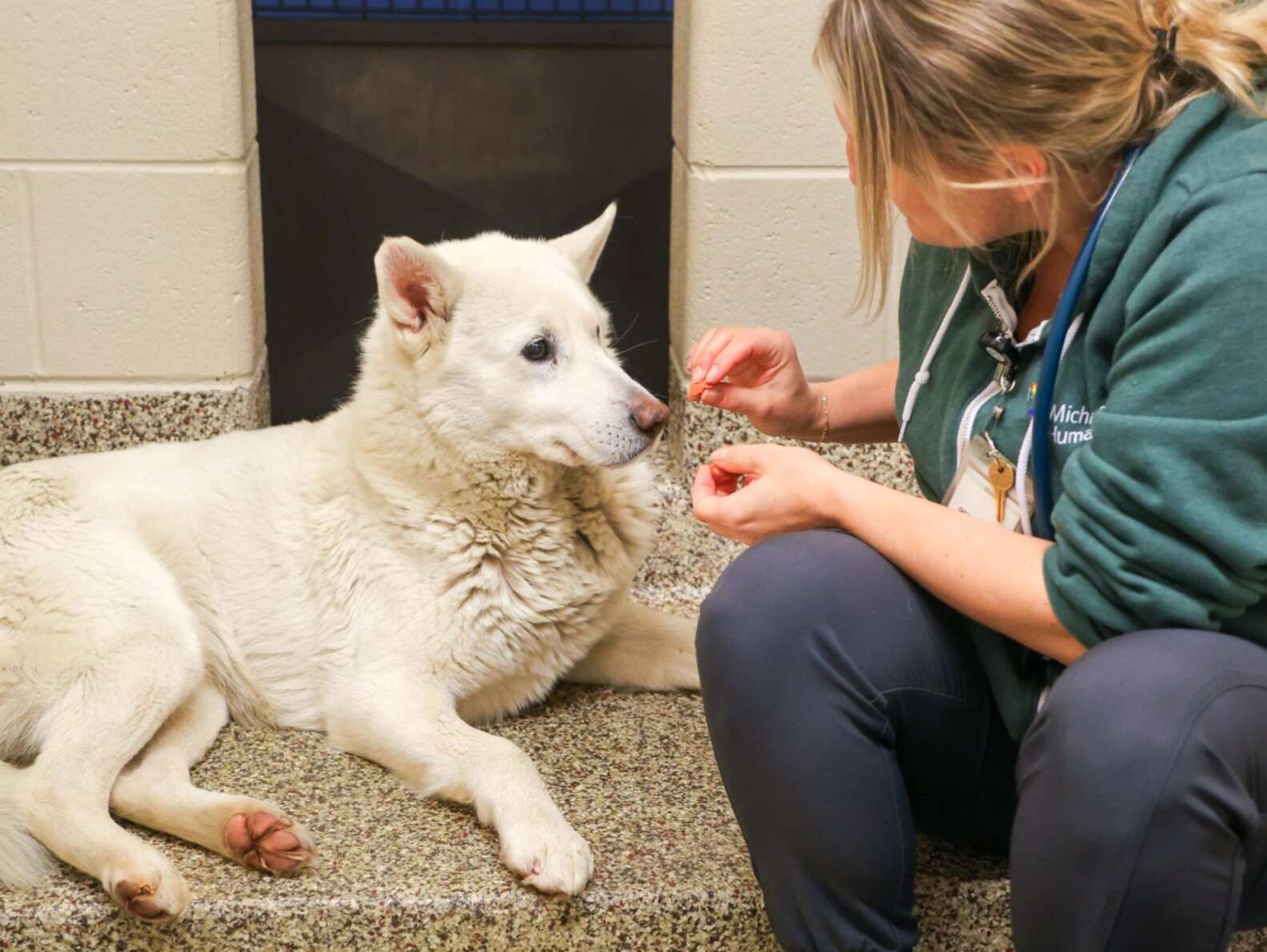
After being brought to Michigan Humane, Gordie was given warm blankets, food, and a safe kennel environment. Staff reported that he remained quiet but alert during his initial evaluation.
Over the following days, he began adjusting to indoor comfort. He met other dogs and responded positively to gentle interaction. Importantly, he showed no signs of aggressive behavior, suggesting a stable temperament despite the stress he had experienced.
Veterinary teams estimated his age at around eight years old. Whether he had lived independently for an extended period or recently became displaced remains unknown.
Cultural Reflections on Winter Survival
Stories of animals enduring harsh winter conditions often capture public imagination. In literature and folklore, survival against the elements symbolizes resilience and strength.
From Jack London’s wilderness tales to contemporary viral rescue stories, cold-weather survival narratives resonate deeply. They remind us of both nature’s challenges and the warmth of collective response.
Scientifically, winter survival depends on adaptation, insulation, access to shelter, and caloric intake. Emotionally, these stories reinforce themes of compassion and interconnectedness.
Gordie’s rescue stands at the intersection of myth and science. He appeared like a solitary wolf in a frozen landscape, yet his survival ultimately depended on human cooperation and veterinary knowledge.

The Role of Community in Animal Welfare
The outcome of this rescue illustrates how community awareness can make a difference. The fishermen could have dismissed the sight as distant wildlife. Instead, they chose to investigate and act.
Volunteer groups such as The KARENS and established organizations like Michigan Humane bridge the gap between observation and intervention. Their work often goes unnoticed until a dramatic situation arises.
Supporting local humane societies helps ensure that resources remain available for future emergencies. Donations, volunteer hours, and responsible pet ownership all contribute to stronger safety networks for animals.
Conclusion: Curiosity, Compassion, and the Bonds We Share
What began as a fleeting glimpse of a white shape on the ice became a story of resilience and cooperation. Gordie’s time stranded on the Detroit River highlights the unpredictability of nature and the strength of collective compassion.
Culturally, we may see echoes of the lone wolf navigating winter terrain. Scientifically, we understand the biological realities of cold exposure and canine behavior. Together, these perspectives deepen our appreciation for the complexity of such moments.
Human curiosity led the fishermen to take a closer look. Empathy motivated them to call for help. Expertise ensured a safe recovery.
In the end, Gordie’s story reminds us that perception can be misleading, that survival often depends on connection, and that curiosity guided by compassion can transform uncertainty into hope.
Sources
The Dodo. “Fishermen Spot White ‘Wolf’ On Icy River — Then Realize The Animal Is Stuck.”
American Veterinary Medical Association. Cold weather safety tips for pets.
Michigan Humane. Animal rescue and rehabilitation resources.
Smithsonian Institution. Research on canine domestication and wolf ancestry.
National Weather Service. Information on winter water safety and hypothermia risk.





Leave a Reply