

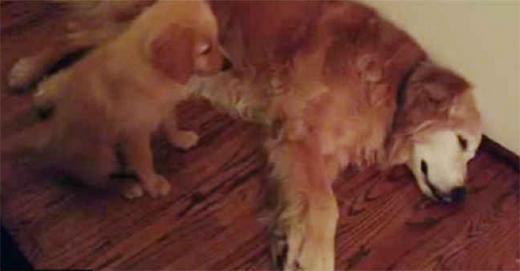
It was late at night when a dog owner noticed something unusual. The house was quiet, the lights were dim, and two dogs were resting side by side. Suddenly, the older dog began to whimper softly in his sleep. His paws twitched, and a faint cry escaped him.
Before the owner could step in, the family’s new puppy did something remarkable. The tiny companion moved closer, gently nudging and comforting the older dog as if to say, “You’re not alone.”
The moment, later shared online, quickly captured hearts. But beyond the sweetness of the scene lies something even more fascinating: the science of canine dreams and the emotional intelligence dogs show toward one another.

Do Dogs Really Dream?
Most pet owners have seen it. A dog’s legs paddle while sleeping. Their ears twitch. Sometimes they make soft sounds that resemble barking or whining.
According to the American Kennel Club, dogs experience sleep cycles similar to humans, including rapid eye movement sleep, commonly known as REM sleep. This is the stage most closely associated with dreaming.
Research has shown that during REM sleep, a dog’s brain activity resembles waking patterns. Scientists at the Massachusetts Institute of Technology conducted studies suggesting that animals replay daily experiences while asleep. While we cannot know exactly what dogs dream about, experts speculate that they may revisit familiar activities such as playing, exploring, or interacting with their favorite people and pets.
Just like humans, dogs may also experience unsettling dreams. Whimpering or subtle body movements can be signs that they are reacting to dream content.
When a Dream Feels Too Real
Seeing a dog cry in their sleep can tug at the heart. It is natural to want to wake them immediately. However, many veterinarians advise caution. Gently calling a dog’s name or softly touching them can help, but startling them abruptly may cause confusion.
The American Veterinary Medical Association explains that sleep is essential for overall health, memory consolidation, and emotional balance. Interrupting sleep repeatedly may not be beneficial unless the dog appears distressed.
In the viral video, the older dog’s whimpers suggested he was having a difficult dream. What happened next, however, revealed something deeper than sleep science.
The Puppy’s Heartwarming Reaction
As the older dog stirred and cried, the puppy moved closer. She nudged him gently and stayed beside him, offering quiet reassurance. The interaction appeared instinctive rather than trained.
Observers often describe such moments as empathy. While scientists debate how to define emotional intelligence in animals, research increasingly supports the idea that dogs are highly attuned to social cues.
A study published by researchers at the University of Vienna found that dogs can respond to emotional expressions from both humans and other dogs. They may not interpret emotions exactly as humans do, but they can detect changes in tone, posture, and sound.
The puppy likely reacted to the older dog’s whimpering and movement. Whether driven by curiosity, bonding, or a simple desire for closeness, the response looked remarkably comforting.
Can Dogs Comfort Each Other?
Stories of dogs supporting one another are common. In multi dog households, companions often form strong social bonds. Grooming, sleeping close together, and synchronized play are all signs of attachment.
The Humane Society of the United States notes that dogs are social animals by nature. Their ancestors lived in cooperative groups, relying on communication and shared awareness for survival. Though domestic life is very different, those instincts remain.
When one dog appears unsettled, another may respond by approaching, licking, or simply staying nearby. This behavior can strengthen bonds and reinforce a sense of safety.
In the case of the puppy and the older dog, their friendship seemed to deepen through that quiet nighttime moment.

The Science Behind Canine Bonding
Dogs build relationships through repeated positive interactions. Shared experiences such as playtime, walks, and rest create familiarity. Oxytocin, sometimes referred to as a bonding hormone, is believed to play a role in attachment between dogs and their companions.
Researchers have observed increases in oxytocin levels during positive social contact between dogs and humans. While studies on dog to dog bonding are still developing, similar mechanisms are thought to contribute.
The puppy’s gentle nudge may not have been a conscious act of comfort in the human sense. However, it likely reflected social attunement and emerging friendship.
Should You Wake a Dog From a Bad Dream?
Pet owners often wonder what to do when their dog appears to have a nightmare. Experts suggest observing first. Mild twitching and soft sounds are usually normal parts of REM sleep.
If intervention seems necessary, calling the dog’s name softly can help them wake gradually. Avoid shaking or startling them. Creating a calm sleep environment and maintaining regular routines can also support restful nights.
Consistent exercise and mental stimulation during the day often improve sleep quality. A well enriched dog tends to rest more peacefully.
Why Moments Like This Matter
The video of the crying dog and comforting puppy resonated because it reflected something universally relatable. We all value companionship during difficult moments. Seeing that same dynamic play out between animals feels both surprising and familiar.
Science helps explain how dogs dream and bond. Yet the emotional impact of such scenes reminds us why dogs have been trusted companions for thousands of years.
They respond to our moods. They adjust to one another. They form connections that appear simple yet carry depth.
A Reflection on Curiosity and Connection
When we watch a dog cry in his sleep and a puppy move closer in response, we are witnessing more than a cute interaction. We are observing the intersection of biology and behavior.
Curiosity leads us to ask whether dogs dream. Research gives us clues. Curiosity also leads us to wonder whether animals feel empathy. Studies suggest they respond to emotional signals in meaningful ways.
In the end, moments like this invite us to look closer at the quiet bonds that exist around us. They remind us that comfort often arrives in small gestures, sometimes from the least expected source.
And perhaps that is why the puppy’s gentle nudge feels so powerful. It speaks to a universal truth that transcends species. Connection matters. Even in our dreams, we are rarely alone.








Leave a Reply