
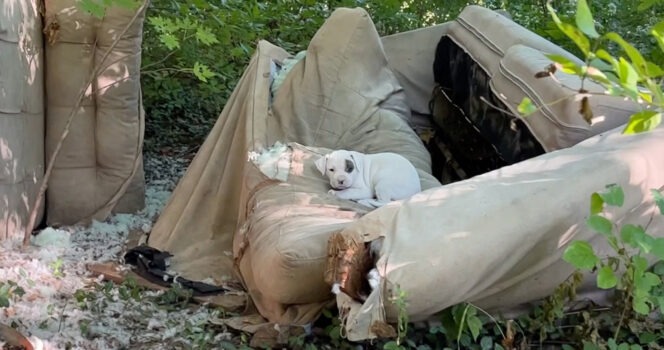
The backyard looked forgotten.
Tall weeds brushed against rusted fencing. Piles of discarded furniture leaned into the grass as if they had been left behind in a hurry. In the middle of it all sat an old, tattered couch. Curled up on one corner was a small, pudgy puppy.
At first glance, it seemed like a single stray trying to find comfort in the chaos. But experienced rescuer Donna Lochmann knew better.
Where there is one puppy, there is often more.
And usually, there is a mother nearby.
A Lifesaving Mission Begins
In 2022, Donna Lochmann, Chief Lifesaving Officer at Stray Rescue of St. Louis, received a call about a family of dogs hiding in an overgrown backyard in Missouri.
The dogs had reportedly been living outdoors after their previous owners were displaced. The yard was cluttered and thick with weeds, making it an uncertain environment for both animals and rescuer.
Lochmann understood immediately that the situation required strategy. A protective mother dog can be cautious around strangers, especially when puppies are involved.
Before approaching the lounging puppy on the couch, she focused on locating the mother.
Meeting Donutfest
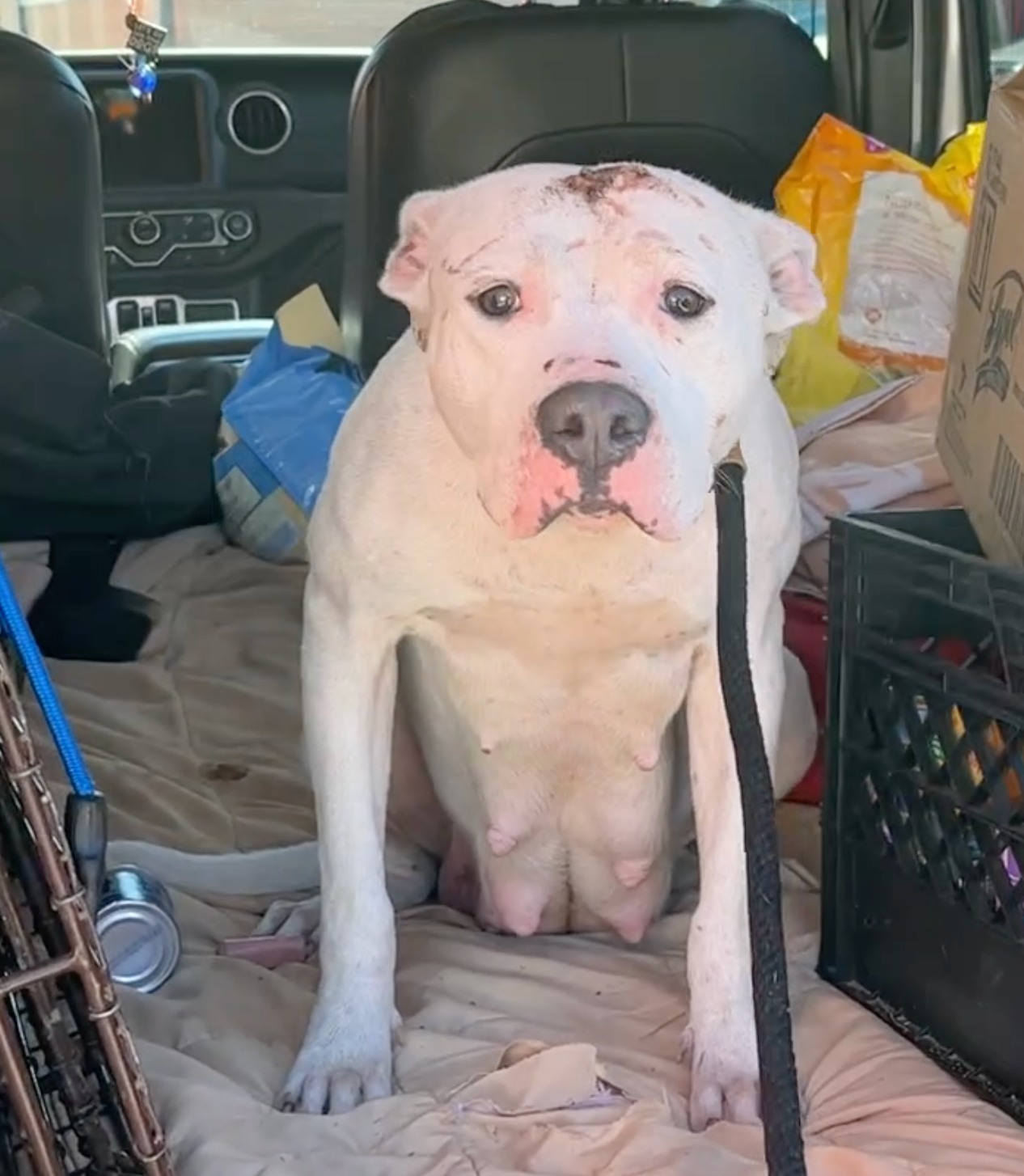
The white-furred mom was nearby, watchful and thin, with visible scratches on her head. Despite her guarded posture, her eyes revealed hunger and exhaustion.
Rather than rushing in, Lochmann used patience and experience. She opened a can of Vienna sausages, allowing the scent to carry through the yard. Food is often the safest bridge between fear and trust.
Within minutes, the mother cautiously approached. Hunger outweighed hesitation. Slowly, she climbed into Lochmann’s car.
The rescue team later named her Donutfest, inspired by a local celebration and Lochmann’s fondness for donuts.
With mom safe, the next step was gathering the puppies.

Finding the Hidden Puppies
The first puppy was near a fence, vocal and unimpressed by the interruption. The second and third were concealed in thick weeds. The fourth had abandoned the couch and attempted a short escape on wobbly legs.
Instead of chasing them, Lochmann repeated her successful tactic. A can of puppy food proved irresistible. One by one, the pups were gently secured and reunited with their mother inside the vehicle.
“It took me a while to get the last three puppies,” Lochmann later shared, “but once I got them all in the car, I was so happy.”
The family was finally safe.
Why Rescue Work Requires Strategy and Science
Animal rescue is often emotional, but it is also grounded in behavioral science.
Dogs, particularly mothers with litters, are driven by protective instincts. According to the American Society for the Prevention of Cruelty to Animals, fear responses in stray animals are typically rooted in survival, not aggression.
Approaching slowly, avoiding direct confrontation, and using food as positive reinforcement are widely recommended techniques in humane rescue operations.
Lochmann’s approach demonstrated these principles in action. By securing the mother first, she reduced the risk of defensive behavior and ensured a smoother rescue for the puppies.

From Backyard to Foster Care
After veterinary screenings, the puppies were placed into foster homes. Their playful personalities quickly emerged.
They were given delightful names inspired by donuts: Maple Long John, Chocolate Sprinkles, Jelly Filled, and Boston Crème. Photos shared online captured their round bellies and bright expressions, drawing immediate interest from families eager to adopt.
Donutfest herself was spayed and prepared for adoption. Estimated to be around three years old, she transformed visibly during her time at the rescue. Images showed her shifting from a wary, exhausted dog into one with a wide, joyful smile.
She was adopted during St. Louis’ Donut Fest event in the fall of 2022, a fitting tribute to her new name and new beginning.
The Broader Picture of Pet Homelessness
While Donutfest’s story ended happily, it also reflects a larger issue.
Economic instability, housing challenges, and displacement have contributed to an increase in pets needing homes. According to the American Society for the Prevention of Cruelty to Animals, hundreds of thousands of animals enter shelters across the United States each year.
Organizations like Stray Rescue of St. Louis operate with a commitment to giving animals a second chance. Their philosophy emphasizes individualized care, medical treatment, and adoption rather than limiting outcomes based on cost or capacity whenever possible.
These rescues rely heavily on community support, foster networks, and donations to sustain their work.

The Emotional Bond Between Humans and Dogs
Why do stories like this resonate so strongly?
Dogs have lived alongside humans for thousands of years. Research from institutions such as Harvard University has explored the hormonal connection between dogs and humans, particularly the role of oxytocin in bonding. Positive interactions between species can increase feelings of attachment and trust.
When we see a frightened dog gradually smile again, it reflects not only physical recovery but emotional transformation.
Donutfest’s journey from hiding in weeds to walking confidently into a new home highlights the power of stability, nutrition, medical care, and affection.
The Role of Community Awareness
Social media played a significant role in finding homes for Donutfest and her puppies. Images and updates shared by the rescue organization spread quickly, capturing the attention of potential adopters.
Raising awareness about rescue work encourages responsible pet ownership. It also educates the public about spaying, neutering, and providing long term care.
Animal welfare experts emphasize preparation before adoption. Prospective owners should consider time, financial commitment, training, and enrichment needs. When expectations align with responsibility, adoption success rates increase significantly.
A Reflection on Curiosity and Compassion
The image of a puppy curled up on an abandoned couch is striking. It invites questions.
How did they end up there? How long had they been surviving alone? What might have happened if no one noticed?
Curiosity often becomes the first step toward compassion. Someone saw. Someone called. Someone responded.
Donna Lochmann did not just see a single puppy. She looked deeper and realized the puppy was not alone. That awareness changed everything.
Science explains canine behavior, maternal instincts, and bonding. Organizations provide structure and medical expertise. But at the center of every rescue is a simple human decision to care.
Stories like Donutfest’s remind us that behind overgrown yards and discarded furniture, there can still be hope waiting to be discovered.
When curiosity leads to action and action leads to kindness, second chances become possible.
And sometimes, all it takes to change a life is noticing that no one is ever truly alone.


Leave a Reply