
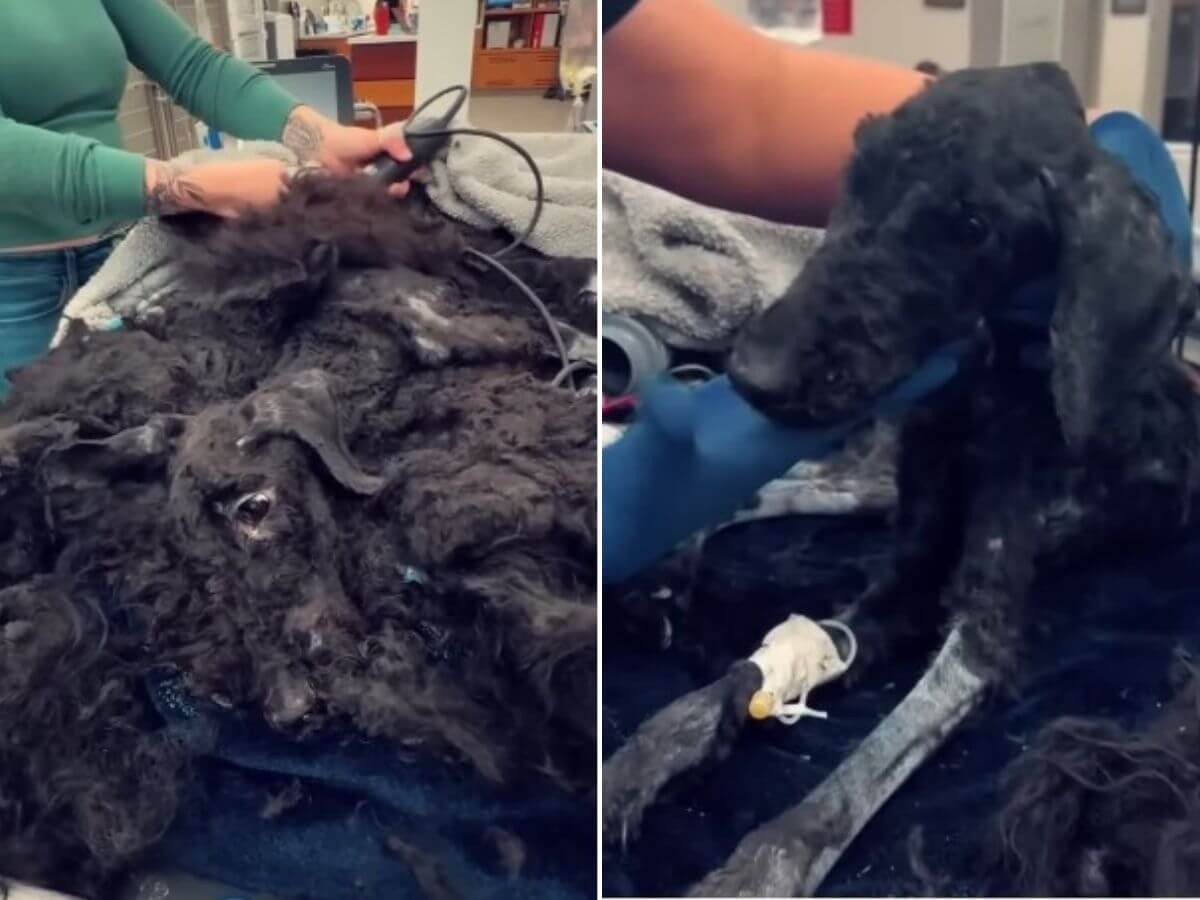
Violet’s story begins in an emergency room under heartbreaking circumstances.
According to Sky Sanctuary, she was brought in by her owner to be euthanized. She was severely underweight, barely responsive, and covered in thick, hardened mats of fur. At first glance, she appeared to be at the very end of her life.
But when the veterinary team checked her vitals, something didn’t add up.
Her breathing, though shallow, was steady. Her organs were functioning. Despite her frail appearance, there was still medical stability — and that meant there was still a chance.
When staff indicated authorities might need to be contacted regarding her condition, the owner left. Violet did not.
A Body on the Brink
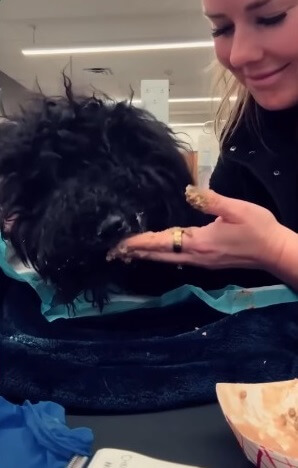
Once fully examined, the extent of her neglect became clear. Violet could not lift her head or eat on her own. Her coat wasn’t just tangled — it had formed dense sheets that restricted movement and likely contributed to skin irritation and infection. Severe matting is not cosmetic; it can impair circulation and mobility.
Underneath the matted fur, her body told the deeper story: muscle wasting from prolonged underfeeding. Chronic malnutrition weakens the immune system and drains energy reserves, leaving animals too depleted to function normally.
But crucially, the damage was not irreversible.
That distinction changed everything.
Choosing Treatment Instead of Goodbye
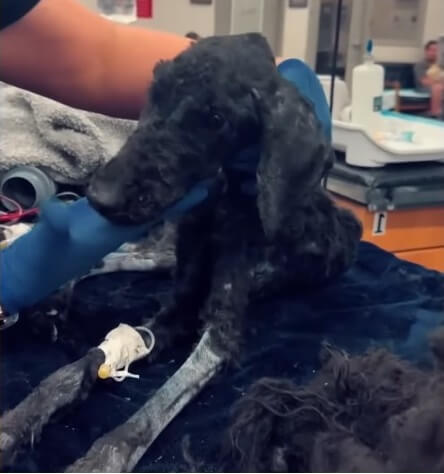
The medical team chose to stabilize her.
Refeeding had to be done carefully. Malnourished bodies can’t simply return to normal portions overnight. She received fluids, small meals, and constant monitoring.
At first, progress was almost invisible.
Then she lifted her head.
Soon after, she began swallowing soft food. Her eyes tracked movement. She responded to touch.
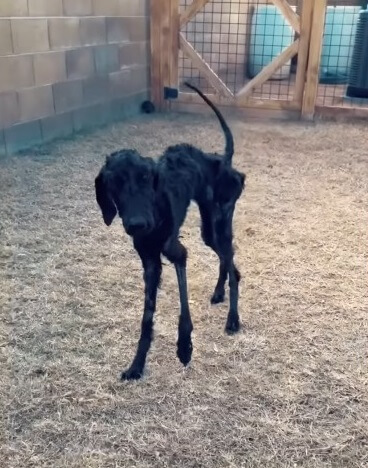
Recovery didn’t arrive dramatically — it came in quiet milestones. Sitting upright. Standing briefly. Taking a few slow, uncertain steps.
Each small victory mattered.
A New Chapter in Foster Care
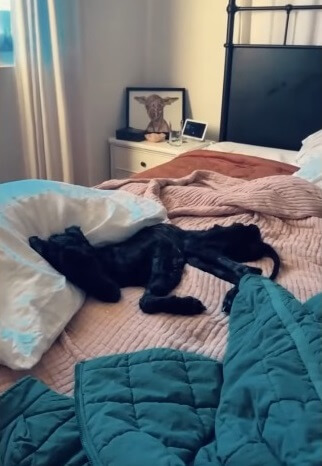
After stabilization, Violet moved into foster care. The change was immediate.
Soft bedding replaced cold surfaces. Meals became regular. Human contact became gentle and predictable. She was, as rescuers described, “treated like a queen” — not with indulgence, but with stability.
Gradually, her weight increased. Her coat grew back clean and manageable. Short walks replaced immobility. Curiosity replaced withdrawal.
There were no overnight miracles — only steady rebuilding.
Why Her Story Matters
Neglect often progresses quietly. Missed grooming appointments. Inconsistent feeding. Delayed veterinary visits. By the time a dog visibly declines, the damage has often been accumulating for months or years.
A matted coat can restrict movement and damage skin. Chronic underfeeding erodes muscle and weakens organ systems. These signs can be mistaken for “old age” or inevitability — when, in reality, they are treatable conditions if addressed in time.
Violet’s case is a reminder that sometimes the difference between euthanasia and recovery isn’t a miracle.
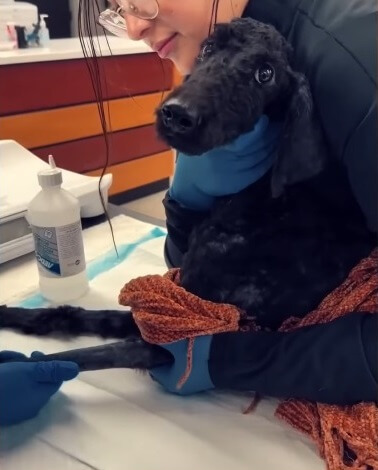
It’s a closer look.
Still Waiting for Forever
Today, Violet walks short distances, eats balanced meals, rests comfortably, and seeks affection. She has regained strength and trust.
What she still needs is a permanent home — one where her meals are consistent, her coat is maintained, and veterinary care is routine.
The team at Sky Sanctuary chose evaluation over assumption. That decision gave Violet time. And time gave her a future.
Sometimes a second chance begins because someone refused to say goodbye too soon.

Leave a Reply