
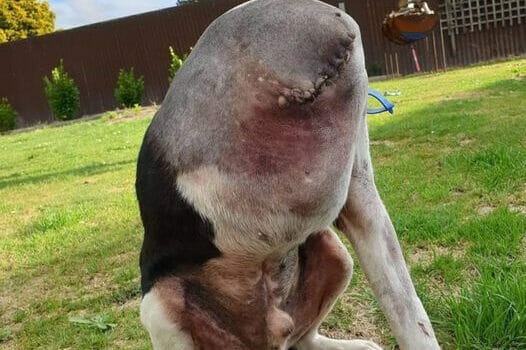
It was supposed to be just another adorable pet picture. A proud owner, a beloved dog, and a quick snapshot in a quiet moment at home. But when the image appeared online, viewers froze. At first glance, it seemed to show something impossible a dog without a head. Social media users blinked, zoomed in, and stared again. What were they actually looking at?
As the image spread across platforms, confusion turned into curiosity. Some reacted with alarm. Others were simply baffled. Yet, as with many viral animal photos, the truth turned out to be far less dramatic and far more human.
In this article, we explore the story behind the puzzling picture shared by TheAnimalClub.net, examine why optical illusions capture our attention so powerfully, and reflect on how internet culture can amplify misunderstandings. Along the way, we balance emotional reaction with scientific explanation, showing how perception, storytelling, and empathy intersect in the digital age.
The Viral Image That Sparked Double Takes
The photo in question first gained traction after being uploaded to Imgur in 2019. Within a short time, it attracted more than 143,000 views and thousands of upvotes. Viewers shared it widely, puzzled by what appeared to be a dog standing without a visible head.
At first glance, the illusion was startling. The dog’s body was clearly visible, but its head seemed to be missing entirely. The image triggered concern among animal lovers, many of whom feared something was seriously wrong.
However, the reality behind the photograph was far less alarming. The dog had previously undergone a necessary front leg amputation, a medical procedure performed to improve its quality of life. At the moment the picture was taken, the dog happened to be turning its head to lick its side. Combined with the angle of the shot and the absence of one front limb, this movement created a visual illusion that temporarily fooled the eye.
To clarify the confusion, a user later shared a diagram on Reddit illustrating how the dog’s posture and camera angle combined to produce the puzzling effect. Once viewers saw the explanation, the image made sense. What had seemed impossible was simply a trick of perspective.
Why Our Brains Fall for Optical Illusions
The “headless” dog photo is a classic example of how the human brain processes incomplete visual information. According to research from the American Psychological Association, our brains constantly fill in gaps to make sense of what we see. When visual cues are ambiguous or misleading, perception can momentarily break down.
Optical illusions occur because the brain relies on patterns and assumptions built from experience. We expect a dog’s head to be in a certain position relative to its body. When that expectation is disrupted by an unusual angle or posture, confusion results.
In this case, the missing front leg altered the silhouette of the dog’s body. As it twisted to groom itself, its head blended into the background, effectively disappearing from immediate view. The brain, unable to reconcile the shape quickly, interpreted the image incorrectly.
Such illusions remind us that perception is not a perfect recording of reality. It is an interpretation, shaped by context and expectation.

The Emotional Power of Animal Imagery
Animal photos hold a special place in online culture. Whether it is a playful kitten, a majestic horse, or a resilient rescue dog, images of animals often evoke strong emotional responses. Platforms like Imgur and Reddit have long been hubs for sharing heartwarming and surprising pet moments.
The initial reaction to the “headless” dog image highlights how deeply people care about animal welfare. Concern spread quickly because viewers wanted reassurance that the dog was safe. Once the truth emerged, relief followed.
The owner eventually shared a full front photo of the three legged pup, confirming that the dog was healthy and well cared for. Far from being a cause for alarm, the story became one of resilience. The dog adapted to life on three legs and continued to thrive.
Life as a Three Legged Dog: A Veterinary Perspective
Amputation in dogs may sound drastic, but veterinary experts emphasize that many animals adapt remarkably well. The American Veterinary Medical Association notes that dogs often regain mobility quickly after limb removal, especially when surgery addresses pain or disease.
Because dogs distribute their weight differently than humans, they can compensate effectively with three legs. Physical therapy, balanced nutrition, and attentive care all contribute to successful recovery.
In the case of the viral photo, the amputation was described as a necessary procedure. While it is natural for pet owners to feel emotional about such decisions, veterinary professionals focus on long term comfort and quality of life. The cheerful follow up images shared online demonstrated that the dog remained active and content.
Internet Virality and the Speed of Assumptions
One reason the image spread so rapidly is the speed of modern sharing. A puzzling or surprising photo can circulate globally within hours. Viewers often react emotionally before seeking context.
Digital culture rewards striking visuals. A confusing image invites comments, speculation, and shares. Yet this same dynamic can also amplify misunderstandings.
In this instance, the outcome was ultimately positive. The explanation emerged quickly, and the narrative shifted from alarm to admiration. But the episode serves as a reminder to pause and consider alternative explanations before drawing conclusions from a single frame.
Cultural Fascination with the Unusual
Throughout history, humans have been drawn to unusual sights. Before the internet, strange photographs might have appeared in newspapers or traveling exhibitions. Today, they trend online.
Cultural historians suggest that curiosity about anomalies reflects a deeper desire to understand the boundaries of normal experience. When something appears to defy expectation, we investigate. Sometimes the answer lies in science. Other times, it lies in perspective.
In the case of the “headless” dog, speculation briefly flourished. Yet the explanation was grounded in simple geometry and motion. The extraordinary turned out to be ordinary once viewed from the right angle.
The Role of Empathy in Digital Spaces
One of the most heartening aspects of this story was the widespread concern for the dog’s wellbeing. Even before facts were clarified, many commenters expressed hope that the animal was safe.
Empathy travels quickly online. While digital platforms can sometimes amplify negativity, they also allow communities of animal lovers to rally around shared values. When the owner provided clarification and a clear photo, the tone shifted to celebration. The dog was praised for its resilience, and many users described it as adorable.
Moments like these demonstrate how storytelling can transform confusion into connection.
A Reminder About Perspective
The viral image serves as a playful yet meaningful reminder that perspective matters. What we think we see is not always the full story. A slight shift in angle can change interpretation completely.
Photographers understand this principle well. Lighting, posture, and timing all shape how an image is perceived. In everyday life, similar distortions occur in less visual ways. We may form quick impressions based on limited information, only to revise them when new details emerge.
In the digital era, where images move faster than explanations, taking a moment to question our first impression can prevent unnecessary worry.
Conclusion: Curiosity, Compassion, and the Stories We Share
The puzzling picture of the so called “headless” dog captured attention because it challenged expectation. It sparked alarm, inspired investigation, and ultimately revealed a heartwarming truth about a resilient three legged pup.
Science explains how our brains misinterpret unusual angles. Veterinary medicine explains how dogs adapt after surgery. Culture explains why we are drawn to the unexpected. Together, these perspectives transform a confusing snapshot into a story about perception and empathy.
At its core, the episode reflects something timeless about human nature. We are curious. We look closer when something does not make sense. We care deeply about animals and want reassurance when they appear vulnerable. And when we discover the truth, we share that understanding with others.
In a world overflowing with images, this viral moment reminds us to pause, observe carefully, and approach the unfamiliar with both curiosity and compassion. Sometimes the most baffling pictures reveal not mystery, but the remarkable adaptability of life and the enduring warmth of human concern.
Sources
TheAnimalClub.net. Perplexing picture of “headless” dog leaves people baffled.
Imgur. Original image upload and engagement data.
Reddit. Community discussion and explanatory diagram.
American Psychological Association. Research on perception and visual processing.
American Veterinary Medical Association. Guidance on limb amputation and pet recovery.



Leave a Reply