
When relentless rain began falling over Houston, Texas, few could have predicted just how quickly the situation would escalate. Streets transformed into rivers. Neighborhoods became islands. Emergency crews moved from call to call as rising water reshaped familiar landscapes.
Amid this unfolding crisis, another urgent drama was taking place along Cypress Creek. Dozens of horses at Cypress Trails Equestrian Center found themselves surrounded by fast-moving floodwaters. What followed was a remarkable example of community courage, coordinated response, and the powerful bond between humans and animals.

Record Rainfall and a City Under Pressure
In April 2016, Houston experienced a severe weather system that delivered more than a foot of rain in a short period. Officials described the conditions as life-threatening, with widespread flooding across Harris County. Reports estimated that the greater Houston area received hundreds of billions of gallons of rainfall over the course of the storm.
According to the National Weather Service, extreme rainfall events can overwhelm drainage systems, especially in low-lying regions prone to flash flooding. When intense downpours coincide with saturated soil, runoff accelerates, quickly filling bayous and creeks.
Harris County was among the hardest-hit areas. Thousands of homes were affected, and emergency responders carried out more than a thousand high-water rescues in a single day. While much attention focused on residents trapped in vehicles and houses, animals were also at risk.
Horses Trapped at Cypress Creek
Cypress Trails Equestrian Center, located near Cypress Creek, housed more than 80 horses at the time of the storm. As water levels rose, parts of the property became submerged. Horses, known for their strong flight instinct, can become anxious in unstable environments, especially when footing is uncertain.
Flood conditions present unique challenges for large animals. Unlike smaller pets, horses cannot easily be lifted or carried. Their size, weight, and sensitivity to stress require careful handling during emergencies.
Authorities and civilian volunteers quickly converged on the scene. Deputies worked to manage safety perimeters, while horse owners and local residents arrived with ropes, boats, and life jackets. Their shared goal was simple: guide as many horses as possible to higher ground.

The Science of Flood Risk and Livestock Safety
Floods are among the most common natural hazards in the United States. The Federal Emergency Management Agency explains that rapid-onset flooding can occur when heavy rainfall overwhelms natural waterways and urban infrastructure.
For livestock owners, preparation is critical. Veterinary and agricultural experts recommend evacuation plans that include accessible trailers, halters, and pre-identified safe zones. Horses are powerful swimmers, but swift currents and debris can increase danger. Stress can also impair coordination, making guidance essential.
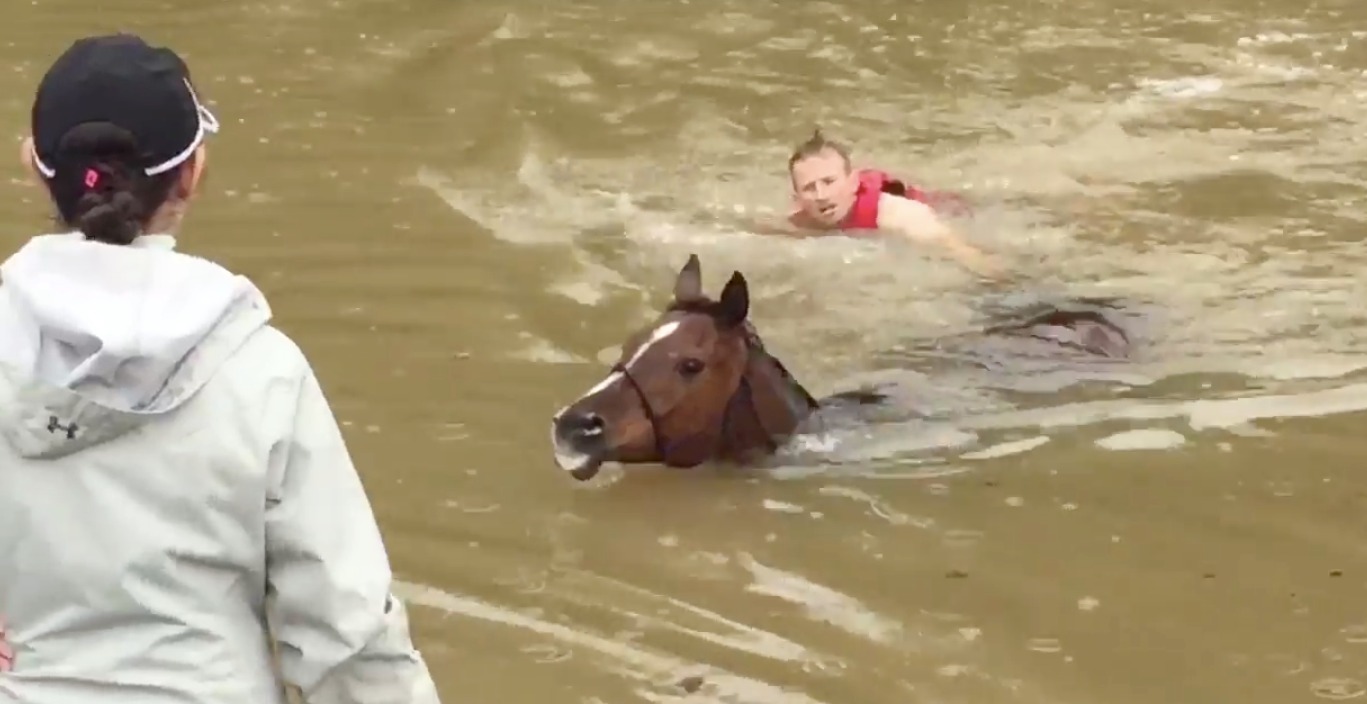
In the Houston case, volunteers entered waist-deep water to steady horses and lead them step by step toward dry land. Former Marine Justin Nelzen was among those who put on a life jacket and waded into the current. He later told local media that the horses felt like family.
His words reflect a broader truth in equestrian culture. Horses are not merely recreational animals. For many owners, they represent years of partnership, training, and emotional connection.
Community Action and Coordination
Disaster response often highlights the balance between official authority and grassroots initiative. At Cypress Creek, deputies sought to ensure that volunteers did not place themselves in unnecessary danger. At the same time, horse owners were determined to assist animals they knew intimately.
Such moments can create tension, yet they also demonstrate shared purpose. According to research from the American Red Cross, effective disaster response relies on coordination between professionals and community members. Clear communication and role clarity help maximize safety while leveraging local knowledge.
In Houston, that coordination enabled dozens of horses to reach safer ground. Videos circulated online showing swimmers guiding animals through chest-deep water. The images resonated nationwide, not because they were sensational, but because they reflected collective determination.
Cultural Significance of Horses in Times of Crisis
Throughout history, horses have symbolized strength, loyalty, and endurance. In American culture especially, horses are intertwined with identity, agriculture, sport, and heritage. From ranch work to therapeutic riding programs, their roles extend far beyond recreation.
During disasters, the rescue of horses often becomes emblematic of community spirit. Similar scenes have unfolded during wildfires in California and hurricanes along the Gulf Coast. These rescues remind observers that emergency response is not limited to human needs alone.
Culturally, helping animals in crisis reinforces values of stewardship and responsibility. Scientifically, it aligns with best practices in comprehensive disaster planning, which increasingly incorporates animal welfare into response strategies.
Lessons in Preparedness
While the Houston flood was extraordinary, climate scientists note that extreme weather events are becoming more frequent in many regions. Urban expansion, changing rainfall patterns, and infrastructure limitations can amplify flood risk.
Preparedness strategies for equestrian facilities include elevated barns, accessible evacuation routes, and collaboration with local emergency management offices. The Texas A&M AgriLife Extension Service provides guidance on livestock disaster readiness, emphasizing early action and clear communication.
For individual horse owners, maintaining identification records, microchips, and updated contact information can aid reunification if displacement occurs. Training horses to load calmly into trailers is another preventive measure.
The events at Cypress Trails illustrate both the challenges and the resilience possible when preparation meets swift community response.
Reflection: Human Bonds in Uncertain Waters
As floodwaters receded and skies gradually cleared over Houston, the images of volunteers guiding horses through swirling currents lingered in public memory. They were not grand gestures performed for recognition. They were instinctive acts driven by attachment and responsibility.
The rescue effort underscored an enduring aspect of human nature. In moments of uncertainty, people often step forward not only for one another but also for the animals who share their lives.
Science explains the mechanics of storms and floodplains. Emergency management outlines the protocols for response. Yet it is curiosity about what can be saved and compassion for those at risk that motivate action.
The Houston horse rescue stands as a reminder that communities are defined not solely by infrastructure but by connection. When rising waters challenge stability, shared purpose can anchor hope.
Sources
Horse Network. “Houston Citizens Rescue Dozens of Horses from Rising Flood Waters.”
National Weather Service. Flood safety and extreme rainfall resources.
Federal Emergency Management Agency. Flood preparedness guidelines.
American Red Cross. Disaster response coordination resources.
Texas A&M AgriLife Extension Service. Livestock emergency planning guidance.
Watch video here:




Leave a Reply