
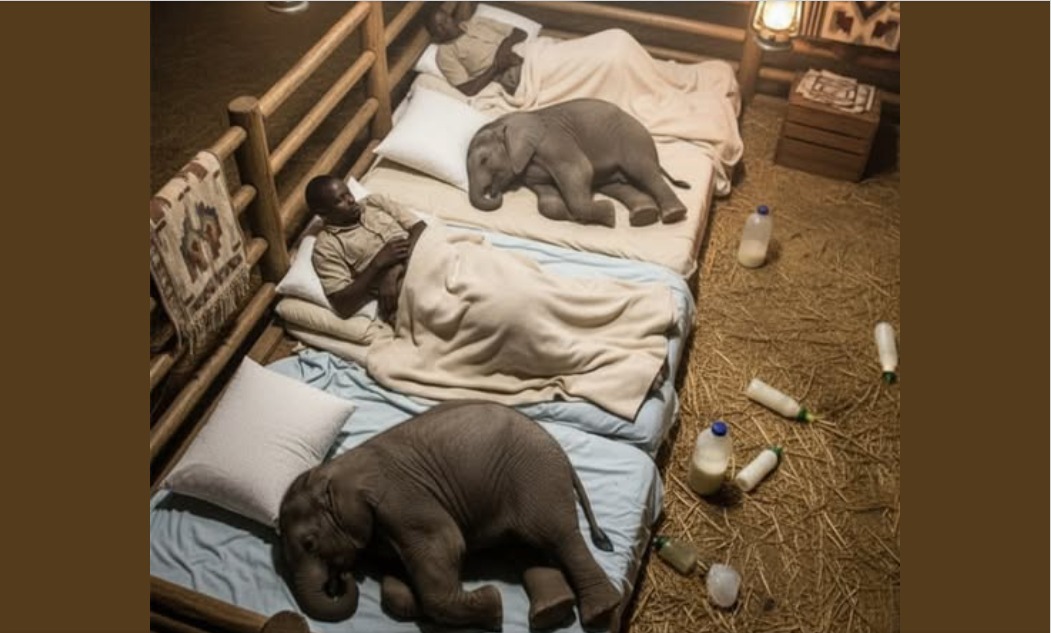
On cool evenings in Kenya’s wilderness, when the sky turns indigo and the sounds of the savanna soften, a different kind of lullaby fills the air. It is not birdsong or wind through acacia trees. It is the soft rumble of baby elephants settling in for the night, comforted by the steady presence of the people who refuse to let them feel alone.
In late October 2025, a touching story captured hearts online. Several orphaned elephant calves reportedly cried through the night after being separated from their mothers. Yet even in their distress, they were surrounded by care. The dedicated team at the David Sheldrick Wildlife Trust, now officially known as the Sheldrick Wildlife Trust, stayed by their side, offering warmth, milk feeds, and reassurance until morning came.
The scene was emotional, but it was also a powerful reminder of how compassion and science work hand in hand in wildlife conservation.

Why Baby Elephants Form Deep Bonds
Elephants are among the most socially complex animals on Earth. Research from organizations such as the World Wildlife Fund highlights that elephant calves rely heavily on their mothers and extended family groups for protection, learning, and emotional security.
In the wild, a calf rarely strays far from its mother. Female relatives, often called “allomothers,” help care for the young. These close-knit herds provide constant physical contact and vocal communication. When separation occurs due to natural or human-related causes, calves can experience significant stress.
Elephants communicate using low-frequency rumbles that travel long distances. Studies suggest these sounds help maintain connection between herd members. When young elephants cry or rumble at night, it is often a call for reassurance and proximity.
At rescue centers, caregivers try to replicate this sense of safety.

Nights at the Nursery
At the Sheldrick Wildlife Trust’s elephant nursery in Nairobi, orphaned calves are given around-the-clock attention. Keepers reportedly sleep near the young elephants, waking every few hours to provide specialized milk formula and comfort.
One caretaker described the experience as similar to raising a newborn child, with interrupted sleep and constant attentiveness. Blankets are used during cooler nights. Gentle words and touch help soothe anxious calves.
This close proximity is intentional. According to conservation experts, minimizing stress improves immune function and overall recovery. Young elephants that feel secure are more likely to eat well, rest properly, and gradually regain strength.
Observers often share heartwarming details: calves leaning against their keepers, softly snoring, or playfully tugging at blankets with their trunks. While these moments are undeniably touching, they also serve a deeper purpose. Trust is the foundation of rehabilitation.
The Science of Elephant Rehabilitation
Wildlife rehabilitation is not simply about providing shelter. It is a long-term, carefully structured process.
The International Union for Conservation of Nature emphasizes that successful wildlife rehabilitation must balance emotional support with gradual independence. For elephants, this can take many years.
Calves are first stabilized with medical care and proper nutrition. Over time, they are introduced to other rescued elephants, forming new social bonds. Older orphans often mentor younger ones, mimicking natural herd structures.
Eventually, when they are strong and socially integrated, many elephants are transferred to protected areas such as Kenya’s Tsavo National Park. There, they continue to grow in semi-wild conditions before full reintegration into free-ranging herds.
This process requires patience. Elephants have long lifespans and complex learning curves. Teaching them how to forage, identify safe water sources, and interact appropriately with wild herds cannot be rushed.

The Human Element in Conservation
The emotional connection between caregivers and elephants often captures public imagination. Yet conservationists stress that this bond is guided by clear boundaries. The goal is not permanent dependence, but eventual independence.
Caretakers dedicate years to the animals in their care. Their work involves feeding schedules, health monitoring, enrichment activities, and protection from environmental stressors. It demands resilience and consistency.
Many supporters believe that sharing these stories helps raise awareness about wildlife conservation. Donations and sponsorship programs fund milk formula, veterinary services, habitat protection, and anti-poaching initiatives.
Still, experts caution against oversimplifying conservation into purely sentimental narratives. While the image of elephants sleeping beside their keepers is powerful, long-term success depends on habitat preservation, community partnerships, and science-based management strategies.
Emotional Intelligence in Elephants
Elephants are frequently cited as examples of advanced emotional intelligence in animals. Research suggests they demonstrate empathy, cooperative behavior, and strong memory.
While interpretations of animal emotion must remain grounded in evidence, behavioral scientists agree that elephants show clear signs of social attachment. Calves seek physical closeness when distressed and relax when surrounded by trusted companions.
At rescue facilities, this understanding shapes caregiving methods. Structured routines, familiar companions, and calm environments all contribute to emotional stability.
A Shared Responsibility
The viral story of baby elephants crying at night resonates because it touches something universal. Separation, comfort, belonging — these are experiences humans understand deeply.
Yet beyond the emotion lies a broader message. Wildlife conservation is not only about rescue. It is about stewardship. Protecting natural habitats, supporting ethical tourism, and funding reputable conservation organizations are practical ways individuals can contribute.
The Sheldrick Wildlife Trust, alongside global partners, works to ensure that orphaned elephants are not only saved but given the opportunity to thrive in the wild once more.
Why Stories Like This Matter
In a world filled with constant information, stories of compassion offer a pause. They remind us that care and responsibility extend beyond our own species.
Human curiosity draws us to such moments. We wonder how elephants feel, how they cope, how they heal. Science provides part of the answer. Empathy provides the rest.
When caregivers stay awake through the night to comfort a frightened calf, they are not only responding to cries. They are participating in a much larger effort to restore balance between humanity and nature.
The baby elephants may cry in the darkness, but they are not alone. Surrounded by dedicated keepers and supported by global conservation networks, they represent hope for a future where wildlife and people coexist with respect.
In the end, these stories endure because they reflect who we aspire to be — thoughtful custodians of a shared planet, guided by knowledge, compassion, and the enduring curiosity that pushes us to protect what we cherish.
Sources
Sheldrick Wildlife Trust Official Reports and Rehabilitation Updates
World Wildlife Fund. African Elephant Conservation Overview
International Union for Conservation of Nature. Guidelines on Wildlife Rehabilitation
National Geographic. Research Features on Elephant Behavior and Social Structure







Leave a Reply