
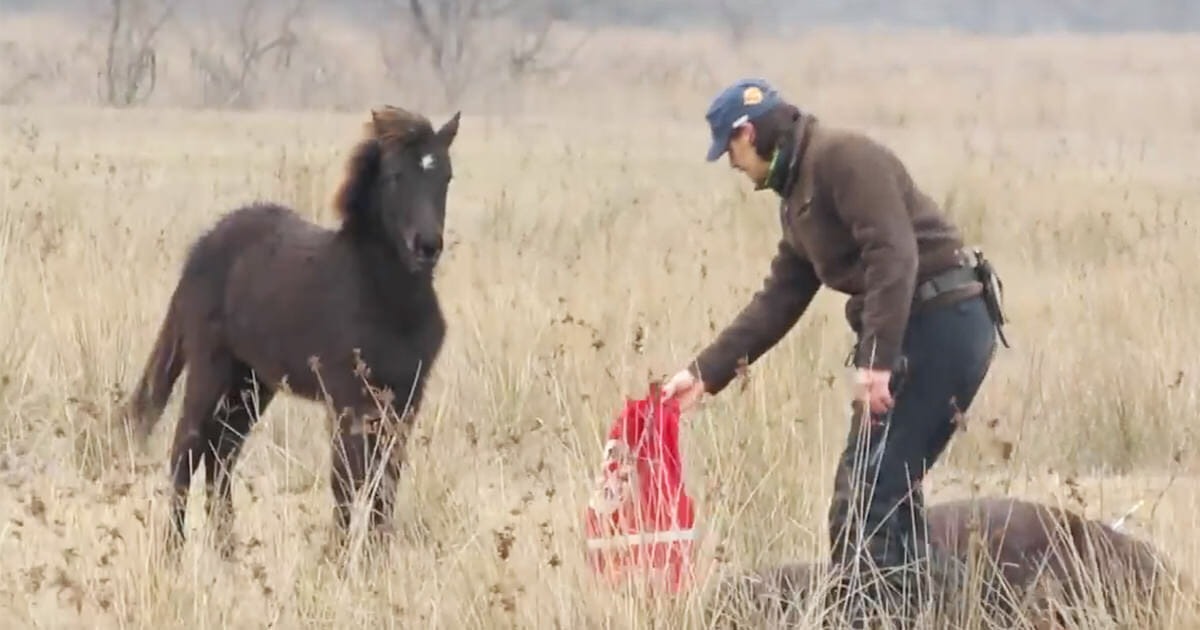
Freedom is instinctive. For wild horses especially, movement is life. Open landscapes, grazing grounds, and the ability to roam are not luxuries but essential parts of their nature. So when one veterinarian encountered a horse whose legs were bound by heavy chains, the moment demanded action.
The rescue, later shared by Newsner, captured global attention. What unfolded in the wetlands of Romania’s Danube Delta was not only a powerful act of compassion but also a window into longstanding rural practices, modern animal welfare efforts, and the emotional bond between humans and animals.

A Disturbing Sight in a Natural Paradise
The Danube Delta, one of Europe’s most biodiverse regions, is home to wetlands, migratory birds, and semi wild horse populations. It is a place of natural beauty and ecological importance.
It was here that veterinarian Ovidiu Roșu encountered a horse restrained by chains fastened around its legs. In certain rural areas of Romania, hobbling horses with chains has historically been used as a method to prevent them from wandering too far. While intended as a control measure, the practice can severely restrict movement and cause injury over time.
In this case, the chains had reportedly begun cutting into the horse’s skin, limiting its ability to move freely. For an animal whose physiology is designed for roaming, such restriction can lead to stress and physical complications.
The Rescue Operation
Ovidiu Roșu, working in collaboration with FOUR PAWS International, immediately prepared to intervene. Approaching a semi wild horse requires patience and calm. Horses are prey animals by nature, meaning they are highly sensitive to perceived threats.
Using careful movements and steady reassurance, he managed to position the horse safely. With tools in hand, he began the delicate process of cutting away the chains. The operation required precision to avoid causing additional harm.
Eventually, the restraints were removed. For a moment, the horse remained still, seemingly uncertain. Then came the shift. The animal began to test its legs, rediscovering the ability to move without resistance.
Observers described what followed as extraordinary. The horse leaned gently toward the veterinarian, meeting his gaze in what many interpreted as a gesture of recognition or gratitude. While humans often attribute emotions to animals, equine behavior experts acknowledge that horses are capable of forming strong social bonds and responding to calm, supportive interactions.

Why Horses Need Freedom to Move
From a scientific perspective, movement is essential to equine health. According to research cited by the American Association of Equine Practitioners, regular locomotion supports joint function, circulation, and mental wellbeing in horses.
When mobility is restricted for extended periods, animals may experience muscle stiffness, stress related behaviors, and increased vulnerability to injury. While some traditional practices were originally developed for practical reasons in rural environments, modern veterinary science emphasizes more humane alternatives.
Education and outreach programs increasingly focus on helping communities adopt safer management methods that protect both livestock and wild horse populations.
Cultural Context and Changing Practices
It is important to understand the broader cultural background. In parts of Eastern Europe, including Romania, semi wild horses have historically roamed communal lands. Managing these populations without permanent fencing presented logistical challenges.
Hobbling, though controversial, became one of several traditional solutions. However, animal welfare standards continue to evolve. Organizations such as FOUR PAWS International advocate for sustainable, humane alternatives that respect both cultural traditions and animal wellbeing.
The rescue of this particular horse became symbolic. It did not condemn communities but highlighted the importance of adapting old practices in light of modern knowledge.

The Psychology Behind the Horse’s Reaction
One of the most shared aspects of the story was the horse’s response after being freed. Viewers described it as a clear expression of gratitude.
While scientific caution advises against over interpreting animal emotions, research from institutions like University of Sussex has shown that horses can recognize human facial expressions and respond differently to positive versus negative cues.
When the freed horse leaned toward Ovidiu and maintained eye contact, it likely reflected curiosity, relief, or social bonding behavior. Horses often use physical proximity to communicate comfort and trust within their herd.
Whether interpreted as gratitude or relief, the interaction resonated deeply with audiences because it symbolized connection.
Wildlife Conservation in the Danube Delta
The Danube Delta is recognized as a UNESCO Biosphere Reserve, supporting diverse ecosystems and species. Managing semi wild horse populations in such environments requires balancing ecological preservation with humane oversight.
Veterinarians and conservation groups continue to monitor the wellbeing of these animals, aiming to reduce harmful practices while respecting local livelihoods.
Stories like this one amplify awareness, encouraging dialogue between conservationists, rural communities, and policymakers.

Why the Story Touched So Many Hearts
Animal rescue narratives often captivate audiences because they combine vulnerability with hope. Seeing a powerful animal restricted triggers empathy. Witnessing that same animal regain freedom inspires relief.
The viral video shared by FOUR PAWS International allowed viewers worldwide to experience that transformation in real time. It reminded people that individual actions, guided by compassion and expertise, can create meaningful change.

Conclusion: Compassion in Action
In the quiet wetlands of the Danube Delta, one veterinarian saw a horse whose instinct to roam had been restrained. Instead of looking away, he acted. The chains were removed, and a moment of reconnection unfolded between human and animal.
Science explains why mobility is vital for equine health. Cultural history explains how restrictive practices emerged. Modern welfare efforts show how traditions can evolve.
At the heart of the story lies something universal: the desire for freedom and the capacity for empathy. The horse’s cautious steps after being freed symbolized more than physical movement. They represented renewal.
Human curiosity often draws us to stories of rescue and resilience. We watch not only to witness change but to reaffirm our belief that kindness matters. And sometimes, in the quiet exchange of a glance between species, we are reminded that compassion transcends words.
Sources
Newsner. “Animal hero saves wild horse from chains.”
FOUR PAWS International. Rescue documentation and animal welfare advocacy.
American Association of Equine Practitioners. Research on equine mobility and health.
University of Sussex. Studies on equine cognition and human interaction.

Leave a Reply