
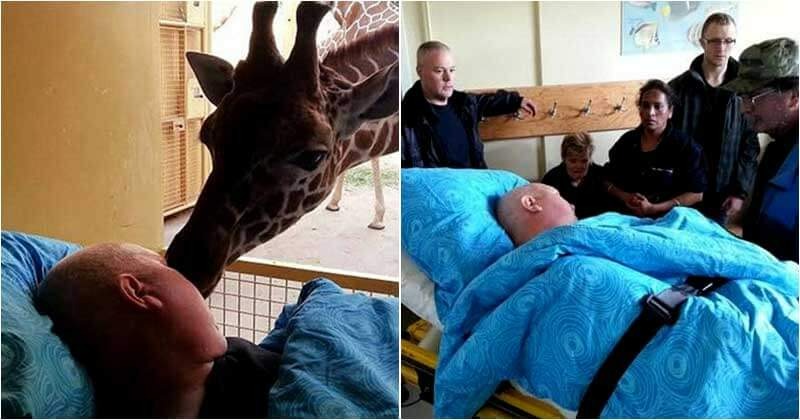
On a quiet winter afternoon in Rotterdam, a small convoy pulled up outside a familiar gate. Inside the vehicle was a man who had spent a quarter of a century caring for the animals within those grounds. He had fixed fences, repaired enclosures, and walked the same pathways through every season. Now, facing a serious illness, he had one final wish: to return to the zoo he called home.
What happened next would ripple across the world as a symbol of the deep bond between humans and animals. As the vehicle stopped near the giraffe enclosure, the tall, gentle creatures slowly approached. One by one, they stretched their long necks toward the window. They leaned in close, appearing to nuzzle and observe their longtime caretaker. The moment felt intimate and profound. For many who later watched the footage, it seemed as if the animals understood.
This is the story of Mario Ejis and the giraffes of Rotterdam’s beloved zoo. It is also a story about how we interpret animal behavior, how culture shapes our understanding of empathy, and how science continues to explore the emotional lives of animals.

The Man Behind the Headlines
Mario Ejis worked for 25 years at Diergaarde Blijdorp, one of the most respected zoological parks in Europe. Known locally as Rotterdam Zoo, it has long emphasized conservation, animal welfare, and education.
Mario was part of the maintenance team, a role that often goes unnoticed but is essential to the daily life of a zoo. He ensured habitats were safe, gates functioned properly, and spaces remained secure for both animals and visitors. Over decades, he became a familiar presence to staff and animals alike.
When his health declined and he could no longer continue his work, colleagues organized a special visit. With careful planning and medical support, he was transported back to the zoo grounds. The stop at the giraffe enclosure would become the most widely shared moment of that day.
A Gentle Encounter with Giants
Giraffes are known for their calm demeanor and striking appearance. Standing as the tallest land animals on Earth, they are often associated with grace and quiet strength. As Mario’s vehicle arrived near their habitat, several giraffes approached.
Video footage shows them leaning their heads toward the window. Their movements appeared slow and deliberate. One giraffe in particular seemed to linger, lowering its face close to Mario’s. To observers, it looked like a farewell gesture.
Social media users described the moment as a “kiss” or a “goodbye.” Comments poured in from around the world, reflecting a shared sense of wonder. Many viewers believed the giraffes recognized the man who had cared for their environment for decades.
While it is impossible to know precisely what the giraffes perceived or felt, the scene resonated deeply. It offered a rare glimpse into a relationship built over years of quiet routine.
The Cultural Meaning of Animal Farewells
Throughout history, animals have held symbolic roles in human storytelling. From ancient myths to modern films, they are often portrayed as loyal companions capable of profound emotional awareness.
In many cultures, giraffes symbolize vision, intuition, and calm presence. Their height allows them to see far across the landscape, and in symbolic language, this has come to represent perspective and foresight. Stories that depict giraffes as gentle guardians fit neatly into this cultural framework.
When audiences watched Mario’s farewell, they did not see only a zoo visit. They saw a timeless narrative: a devoted caretaker returning to those he had served, greeted by creatures who seemed to remember him.
Such interpretations reflect our human tendency to assign meaning to animal behavior. This process, known as anthropomorphism, involves attributing human traits or emotions to nonhuman beings. While it can sometimes lead to misunderstandings, it also reveals our deep desire to connect.
What Science Says About Animal Emotion
The question of whether animals experience emotions similar to humans has been widely studied. Researchers in animal behavior and cognition increasingly recognize that many species display complex social and emotional capacities.
Studies suggest that mammals, in particular, can form social bonds, show signs of stress, and respond to familiar individuals. Giraffes, though less studied than primates or elephants, are known to live in loose social groups and maintain long-term associations.
Research published in journals such as Animal Behaviour and findings from organizations like the World Association of Zoos and Aquariums emphasize that animals are sensitive to their environments and the people within them. Regular caretakers often become consistent figures in an animal’s daily routine.
It is therefore plausible that giraffes could recognize familiar humans through visual cues, scent, or voice. However, scientists caution against making definitive claims about specific emotional states without controlled studies.
In Mario’s case, the giraffes’ approach may have been influenced by curiosity, routine feeding patterns, or recognition of a familiar presence. The interpretation of their actions as a conscious farewell remains a heartfelt possibility rather than a confirmed conclusion.
The Power of Routine and Recognition
Animals in managed care environments often become accustomed to specific individuals. Consistent exposure builds familiarity. Research on domesticated animals such as dogs and horses has shown that they can distinguish between people and respond differently to those they know well.
While giraffes are not domesticated, they are capable of learning and memory. Caretakers who spend years around them may become associated with safety or positive experiences.
At institutions like Diergaarde Blijdorp, animal welfare protocols emphasize stable routines. These routines reduce stress and support well-being. When a familiar person appears after a long absence, animals may respond with heightened interest.
Whether the giraffes’ actions were driven by recognition, curiosity, or social instinct, the moment highlighted the subtle complexity of interspecies relationships.
Why the Story Touched Millions
The widespread reaction to Mario’s farewell reveals as much about humans as it does about animals. In a world often filled with fast-moving headlines, stories of gentle connection stand out.
The image of towering giraffes lowering their heads toward a man in a vehicle evokes humility and tenderness. It contrasts the vast difference in size between species with the closeness of shared experience.
For many viewers, the moment represented gratitude. Mario had dedicated decades to maintaining a space where animals could thrive. In return, the giraffes appeared to offer presence and calm.
Psychologists note that people are naturally drawn to narratives of mutual care. Such stories reinforce values of compassion and loyalty. Even when extraordinary details are interpreted through emotion rather than strict evidence, the underlying message resonates.
Zoos, Ethics, and Evolving Perspectives
Modern zoos occupy a complex place in society. Institutions like Diergaarde Blijdorp have shifted focus toward conservation, education, and habitat design that reflects natural ecosystems.
Organizations including the World Association of Zoos and Aquariums promote guidelines for enrichment, veterinary care, and psychological well-being. These efforts aim to create environments where animals can express natural behaviors.
Stories like Mario’s highlight the human side of zoo work. Behind exhibits and educational programs are staff members who form daily connections with animals. Maintenance teams, keepers, and veterinarians all contribute to that ecosystem.
The farewell moment invites reflection on how these relationships develop over time. It suggests that consistent care and respect may foster familiarity that transcends species boundaries.
Between Myth and Measured Observation
There is a delicate balance between celebrating a touching moment and making claims that exceed available evidence. The idea that the giraffes “knew” or “understood” Mario’s condition belongs partly to the realm of poetic interpretation.
Yet science does not dismiss the possibility of meaningful animal responses. Increasing research into animal cognition continues to challenge earlier assumptions that complex emotions are uniquely human.
Perhaps the most honest position lies between myth and measurement. We can acknowledge the emotional impact of the scene while also recognizing that animal behavior is shaped by multiple factors.
The story’s endurance may depend not on proving what the giraffes felt, but on recognizing what the moment revealed about human empathy.
A Final Visit, A Lasting Legacy
Mario’s visit to the zoo allowed him to reconnect with colleagues and revisit the environment he had helped sustain for 25 years. For his family and coworkers, the day offered comfort and closure.
For viewers around the globe, it became a symbol of the unseen threads that link humans and animals. The giraffes’ gentle approach remains open to interpretation, yet its emotional authenticity continues to inspire.
In the end, the story is not only about a zookeeper and a group of giraffes. It is about how we understand connection. It is about the stories we tell to make sense of life’s transitions. And it is about the hope that care given over many years can return to us in unexpected ways.
Human curiosity drives us to ask whether animals feel as we do. Science urges patience and careful study. Culture invites symbolism and narrative. Between these perspectives lies a shared truth: we are deeply moved by moments that suggest understanding across species.
Perhaps that is the greatest gift of Mario’s farewell. It reminds us that compassion, whether measured in data or felt in the heart, continues to shape the way we see the natural world. And in that space between certainty and wonder, our curiosity endures.
Sources
World Association of Zoos and Aquariums. Animal Welfare Strategy and Guidelines.
Animal Behaviour Journal. Research on mammalian social cognition and recognition.
Diergaarde Blijdorp Official Website. History and conservation mission.
National Geographic. Articles on giraffe behavior and social structure.
Smithsonian Magazine. Coverage of animal emotion and cognitive research.







Leave a Reply